
The Emperor’s Death and a Widow’s Vision
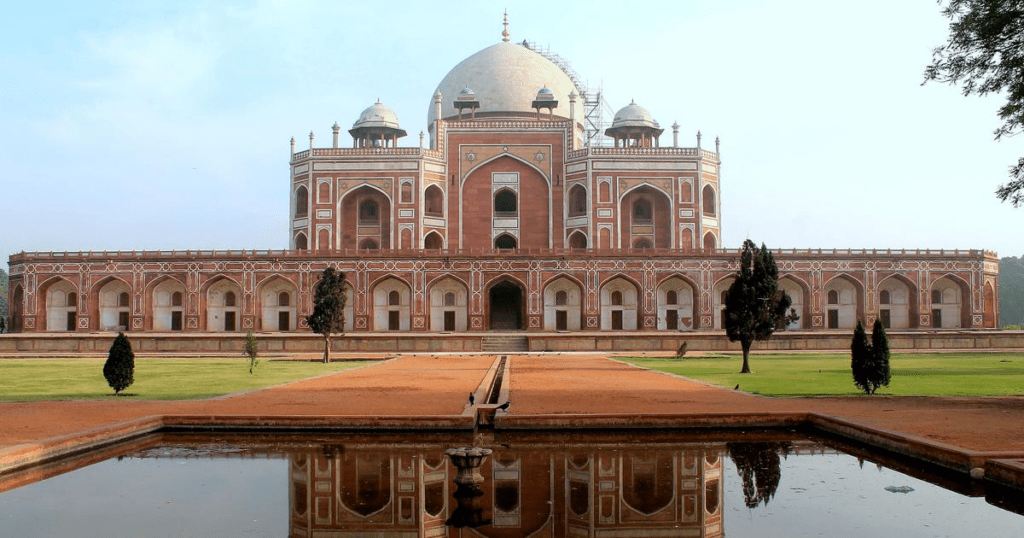
In 1556, the Mughal Emperor Humayun died suddenly after a fall from the steps of his library. Fourteen years later, his wife Hamida Banu Begam, also known as Haji Begam, initiated the construction of his tomb in Delhi.
A Personal and Political Act
This was more than an act of mourning. It was a statement of Mughal power and cultural vision—at a time when the empire was still fragile under Akbar’s early reign.
Cost and Patronage
The project cost an estimated ₹15 lakh (1.5 million rupees), a vast sum in the 16th century. It was built not only as a tomb but as a symbol of a dynasty in transition—from nomadic warriors to settled emperors.
Persian Influence on the Design
The tomb marks the first major example of Mughal architecture in India that combined Persian, Central Asian, and Indian elements into one harmonious whole.
The Architect: Mirak Mirza Ghiyath
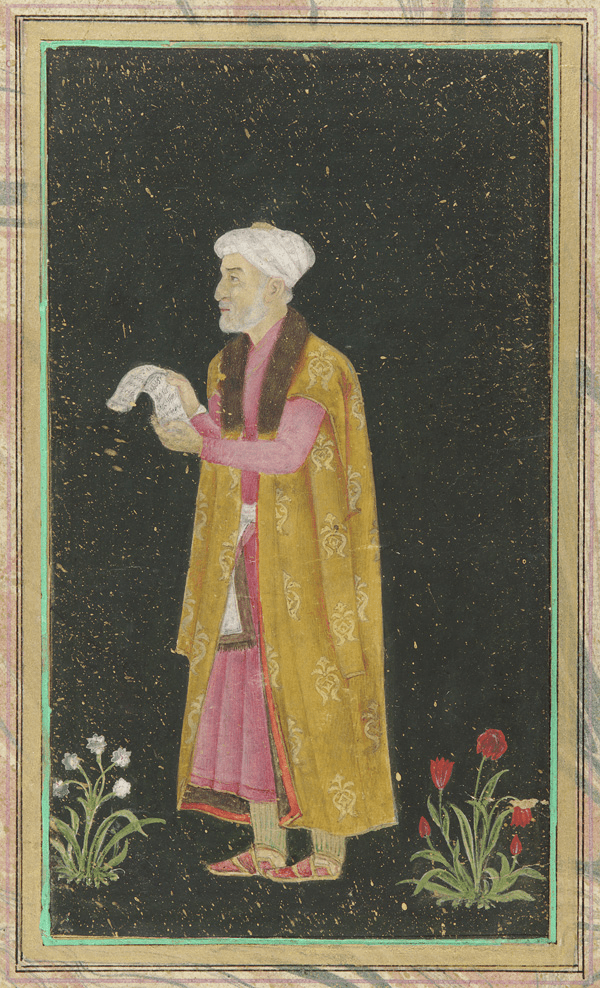
Haji Begam employed Mirak Mirza Ghiyath, a Persian architect, to bring the project to life. His style introduced several key features that later became standard in Mughal constructions.
What Defined the Persian Touch?
- Arched alcoves and corridors
- High symmetrical elevations
- Use of geometric harmony in floor plans
- Double dome construction
Even today, the structure feels closer to Isfahan than Delhi—yet rooted in Indian soil.
The Garden Tomb Concept
One of the defining aspects of Humayun Tomb is its setting: a formal charbagh or four-part garden layout.
Symbolism of the Charbagh
- Divided into four parterres by water channels
- Reflects Quranic visions of paradise
- Emphasizes order, balance, and spirituality
Each section channels water toward the central tomb, symbolizing the flow of life toward the eternal.
Architectural Breakdown of the Mausoleum
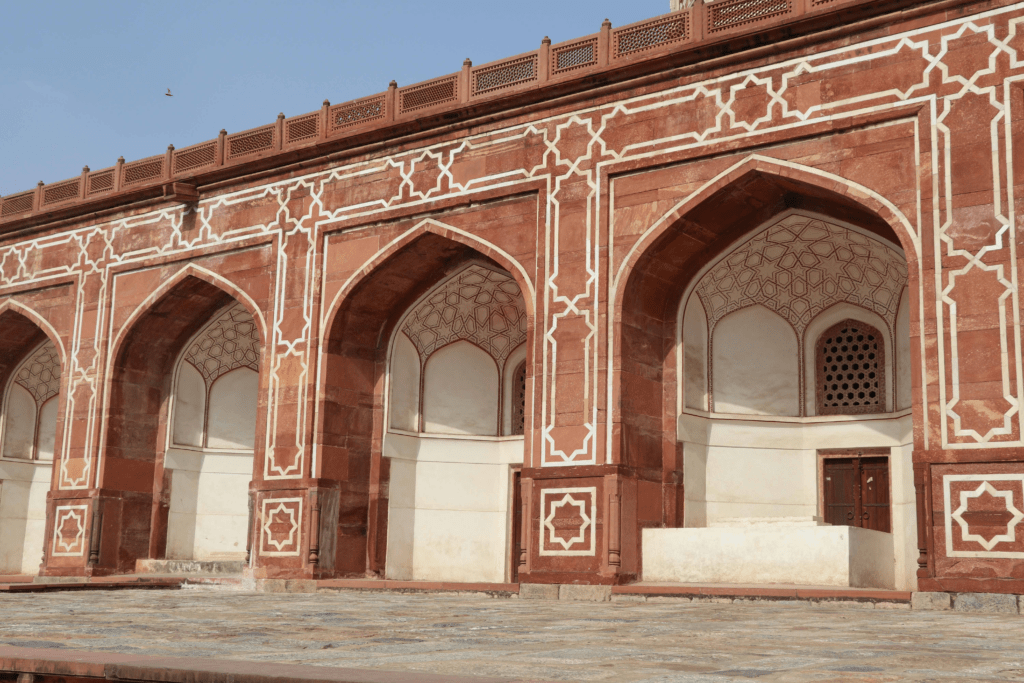
The mausoleum is a red sandstone, double-storeyed square building with chamfered corners. It sits atop a raised terrace that conceals underground cells.
Key Features
- Octagonal central chamber with the cenotaph of Humayun
- Corner chambers containing other Mughal graves
- Arched lobbies connecting each chamber
- Three arched alcoves on each side—the middle one taller than the rest
- Marble borders and paneling along the elevations
- Roof crowned by a 42.5-meter-high double dome and chhatris (kiosks)
Layout Logic
The structure invites both vertical and horizontal movement. From outside, it appears symmetrical and majestic; from within, it creates spatial complexity and spiritual flow.
Use of Indian Motifs
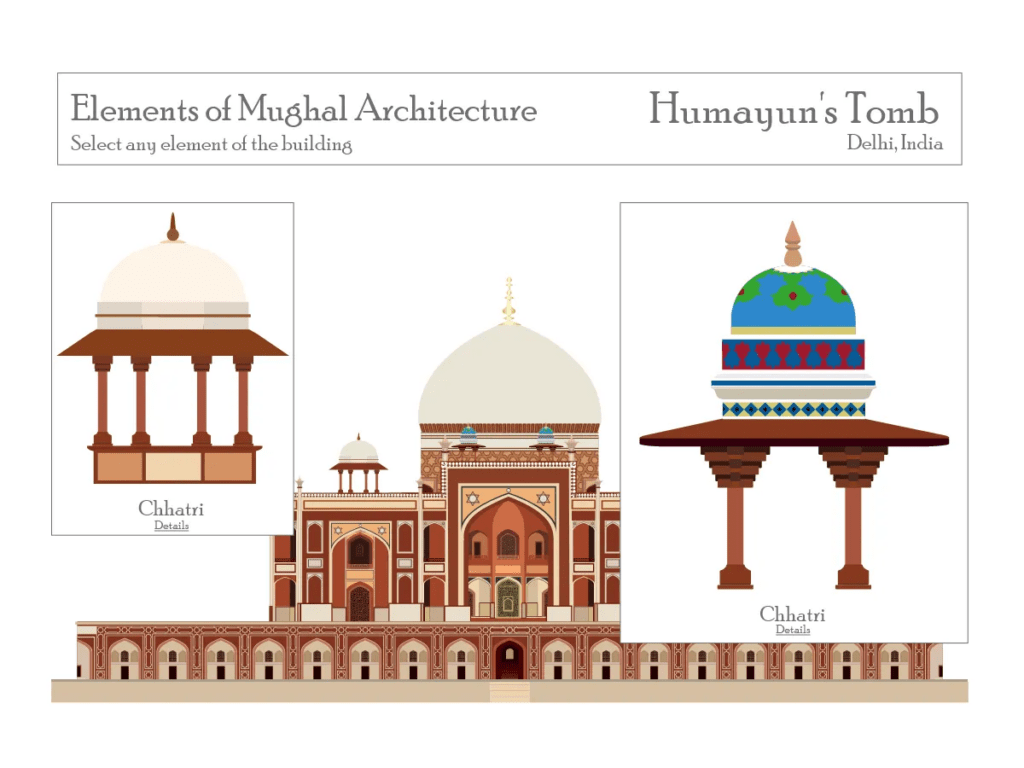
Though heavily Persian in origin, Humayun Tomb includes several Indian architectural touches that root it firmly in the subcontinent.
Distinctive Indian Elements
- Chhatris (pillared kiosks) surrounding the dome
- The stepped terraces resemble earlier Sultanate-era tombs
- Use of local red sandstone, later reused at Fatehpur Sikri and Agra
These features created a fusion style that became the blueprint for future Mughal masterpieces.
Historical Significance and Mughal Burials
Beyond its architectural innovations, the humayun tomb became a dynastic necropolis.
Other Mughal Burials Inside
- Empress Haji Begam herself
- Dara Shikoh, son of Shah Jahan
- Several lesser-known princes and consorts
- At least 150 Mughal family members
This made it a symbolic seat of empire—a permanent claim to Delhi long before the British or modern India.
A Precursor to the Taj Mahal
While Sikandar Lodi’s tomb was India’s first garden tomb, it was Humayun’s that redefined the genre and directly inspired the later construction of the Taj Mahal.
Shared Features with the Taj
- Central double dome
- Raised square platform
- Use of symmetry and garden layout
- Fusion of Persian planning with Indian aesthetics
How often do you find the architectural seed of one global wonder planted in another?
Historical Events at the Tomb
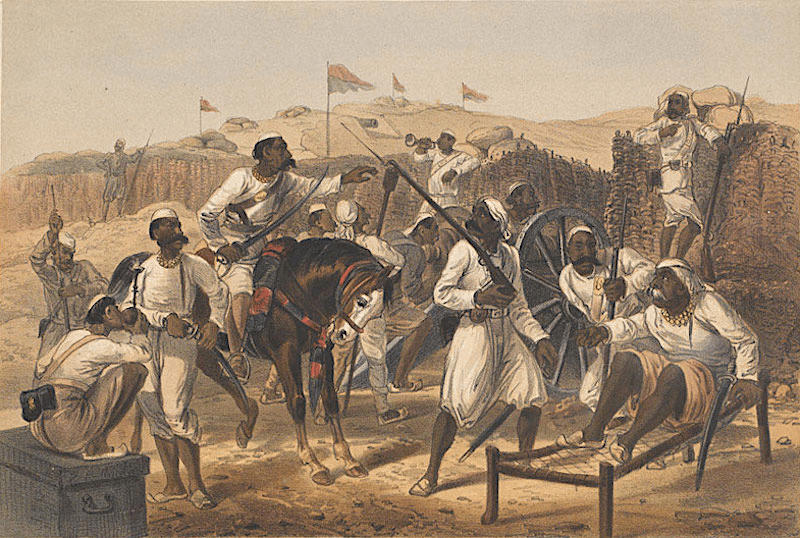
This monument has witnessed more than Mughal deaths—it also played a role during India’s early fight for independence.
1857: The First War of Independence
During the uprising against the British in 1857, Bahadur Shah Zafar, the last Mughal emperor, took refuge here with his sons. It marked the end of an era, with Humayun’s tomb becoming both sanctuary and symbol of the dying dynasty.
Barber’s Tomb and Additional Structures
To the southwest lies a lesser-known but architecturally rich structure—the Barber’s Tomb, locally called Nai-ka-Gumbad.
Key Details
- Built on a raised platform
- Accessed by seven steps from the southern side
- Square in plan, with a central domed chamber
- Covered by a double dome, reflecting the main tomb’s style
While small, it reflects the same design vocabulary—an echo of the emperor’s resting place.
Preservation, Tourism, and UNESCO Status
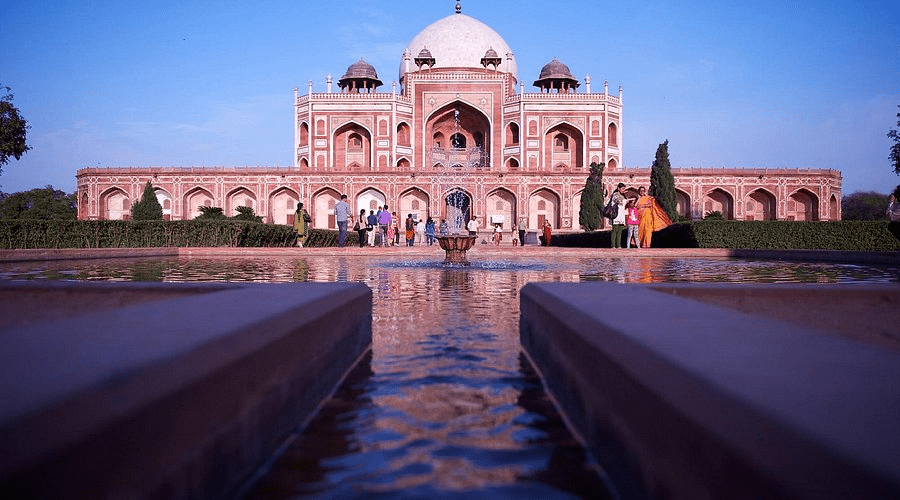
Declared a UNESCO World Heritage Site in 1993, Humayun Tomb has undergone significant conservation and remains one of Delhi’s most visited monuments.
Restoration Efforts
- Cleaning and repair of marble inlays
- Revitalization of charbagh gardens
- Preservation of sandstone surfaces and perforated screens
With each layer of dust removed, its legacy grows sharper.
Humayun Tomb Architectural Highlights
| Element | Details |
| Location | Delhi, India |
| Built By | Hamida Banu Begam (Haji Begam) |
| Architect | Mirak Mirza Ghiyath (Persia) |
| Construction Year | Started in 1569, completed in early 1570s |
| Materials | Red sandstone, marble |
| Design Style | Indo-Persian Mughal architecture |
| Main Features | Double dome, charbagh, chhatris, arched alcoves |
| Height | Central dome rises approx. 42.5 meters |
| UNESCO Status | Inscribed in 1993 |