Chhath Puja stands as a vibrant festival deeply rooted in the cultural fabric of northern and eastern India. This celebration honors the sun god Surya and his consort Chhathi Mai, blending devotion with community spirit. Over time, it has grown from regional roots in Bihar, Jharkhand, and Chhattisgarh to a global event, drawing crowds that prompt special civic preparations.
The festival spans four days, starting six days after Diwali in the Kartik month, aligning with October or November. Known as Surya Shasthi Vrat, it emphasizes the sixth day after the new moon. Uniquely, rituals begin at sunset, setting it apart from typical solar festivals. While open to all, it often centers on women, as Chhathi Mai protects children and ensures their well-being.
Have you ever wondered about the essence of Chhathi Mai? Her name ties to the number six, drawing from ancient texts like the Brahmavaivarta Purana. There, creation divides Prakriti into elements, with the sixth becoming Shasthi or Chhathi, also called Devasena.
The Legendary Beginnings of Devasena
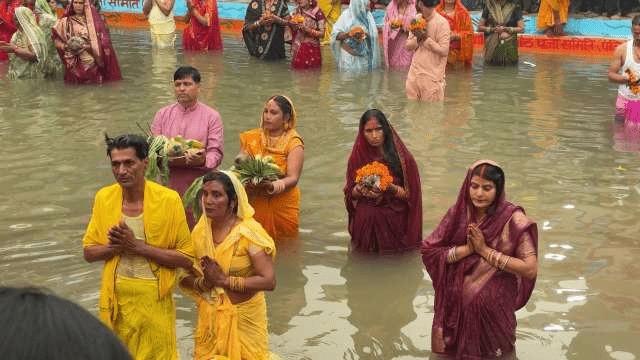
Devasena emerges as a key figure in chhath puja story, symbolizing protection and fertility. Ancient narratives portray her as part of the cosmic order, born from Prakriti’s division. This goddess, revered as Chhathi Mai, connects deeply with family and lineage.
In folklore, Devasena’s association with children stems from tales of royal longing. A childless king and queen, Priyavrat and Malini, perform a sacred yagya. A divine pudding appears, but tragedy strikes with a stillborn child. In despair, the queen seeks solace by a river, where Devasena appears.
Devasena’s Intervention and Promise
The goddess reveals herself as Shasthi, urging worship of her and Surya for blessings. The queen follows, soon welcoming a healthy child. This act sparks the tradition of Chhath Puja, spreading as a rite for progeny and health.
Such stories highlight why is chhath puja celebrated – to seek divine favor for families. Devotees fast rigorously, offering prayers at water bodies, echoing the queen’s riverside encounter.
Cultural Significance in Modern Times
Today, these myths resonate in bustling celebrations. Women prepare offerings like thekua and fruits, standing in water to pray. The festival fosters unity, with families gathering at ghats.
Chhathi Mai as the Guardian of Lineage
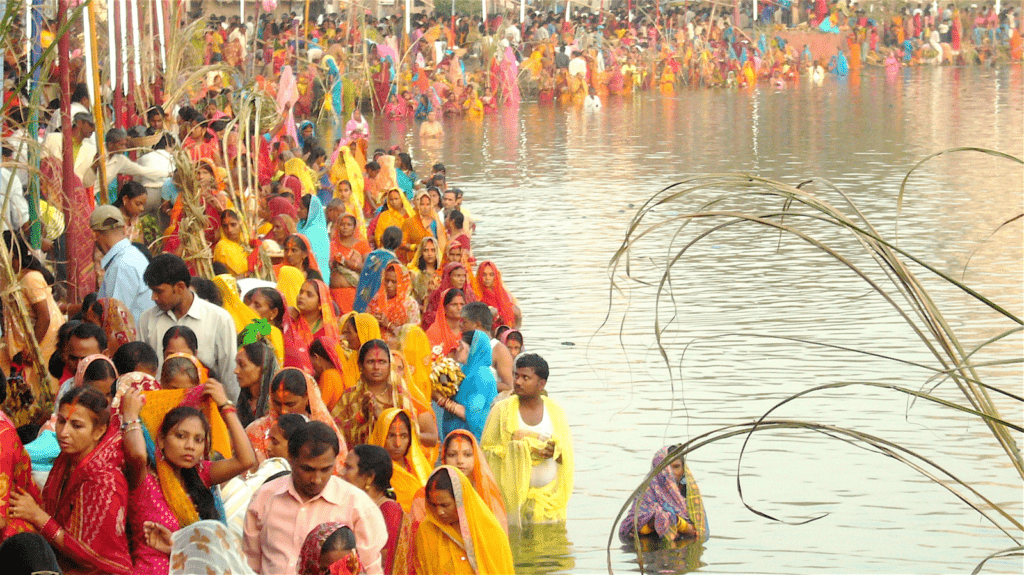
Influences from mother goddess cults shape Chhathi Mai’s image. Myths describe her birth in Bihar to restore harmony after cosmic battles. As a boon-giver, she ensures sons and safeguards vansha, or family lines.
Anthropomorphic depictions of Chhathi Mai are recent, yet sun worship remains core. Recited kathas blend various traditions, enriching the festival’s narrative.
Myths from Tribal and Folk Traditions
In tribal lore, Chhathi Mai merges with solar customs. K.S. Singh’s insights note her role in perpetuating lineages through child-granting boons.
These elements show how chhath puja evolves, incorporating diverse cultural threads while staying true to its origins.
Connections to Devasena and Kartik
Devasena’s ties extend to Kartik in puranic texts. The Brahmavaivarta Purana mentions her marriage to Kartik, suggesting deeper symbolic unions.
Marital Lore in Ancient Scriptures
Narada’s narratives in the Ganesa Khanda describe Kartik receiving knowledge, leading to his wedding with Devasena, called Sasthi. This union hints at themes of fertility and protection.
Such stories add layers to chhath puja story in english, linking solar and martial deities.
References in Epic Tales: Ramayana
Chhath Puja finds echoes in the Ramayana. After exile, Rama and Sita perform similar rituals to atone for Ravana’s slaying.
Sita’s Ritual in Local Beliefs
In Munger, Bihar, locals claim Sita conducted the vrat there. The Sita Charan Mandir, with foot impressions, stands as a testament.
This connection underscores the festival’s ancient pedigree, tying it to heroic epics.
Mahabharata Links and Karna’s Practices
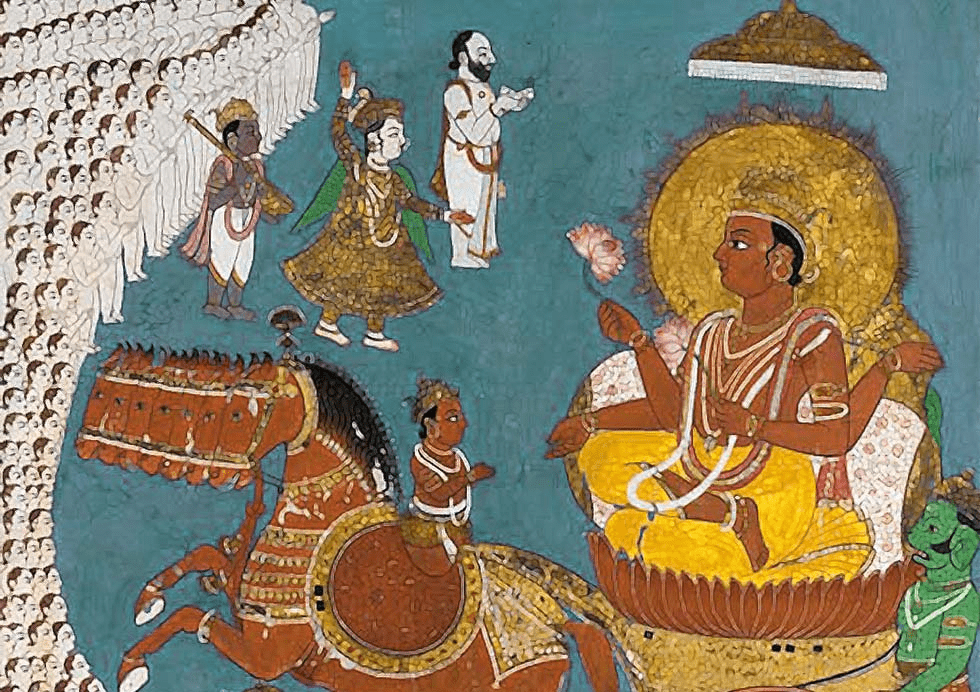
The Mahabharata also weaves in Chhath elements. Karna, Surya’s son, performs sun rituals before Kurukshetra.
Karna’s Devotion to Surya
Standing in water, offering arghya – these mirror modern practices. Later, Draupadi and Pandavas adopt similar rites to reclaim their realm.
Why is chhath puja celebrated this way? It honors solar power for victory and prosperity.
Agricultural Roots and Harvest Gratitude
Beyond myths, Chhath Puja ties to farming cycles. As a post-harvest event, it thanks Surya for abundant yields, especially rice.
Seasonal Timing and Offerings
Falling after Kharif harvest, devotees offer fresh produce. This gratitude aspect blends spiritual and practical life.
Families prepare seasonal fruits, reflecting nature’s bounty.
Evolution of Chhath Puja Across Regions
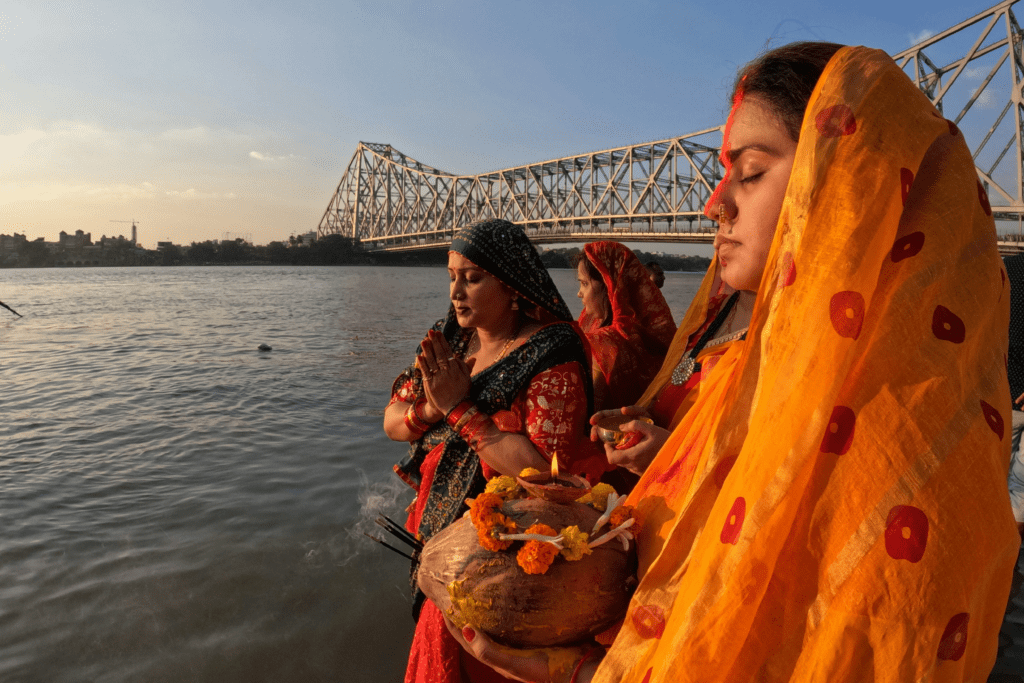
Chhath Puja’s reach extends beyond its origins, embracing communities in Nepal and diaspora groups worldwide. Migrants carry traditions, adapting them to new environments while preserving core elements.
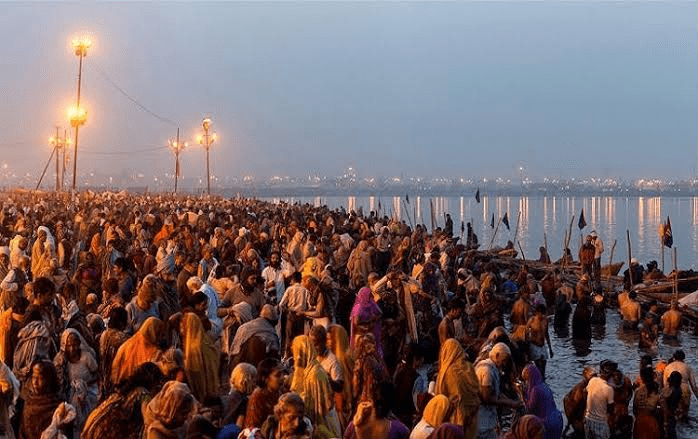
In urban settings, ghats transform into festive hubs. Authorities build temporary ponds, ensuring safety amid growing crowds. This expansion reflects the festival’s enduring appeal.
Spread from Bihar to Global Shores
Starting in Bihar’s rural heartlands, the puja gained traction in neighboring states. Devotees in cities like Delhi and Mumbai recreate rituals, using rivers or artificial water bodies.
Overseas, Indian communities in the US and UK observe it with enthusiasm. Virtual gatherings connect families, sharing chhath puja story through online platforms.
Adaptations in Contemporary Celebrations
Modern twists include eco-friendly practices. Biodegradable offerings replace plastics, aligning with environmental concerns. Yet, the essence remains – devotion to Surya and Chhathi Mai.
Who Performed Chhath Puja First: Tracing the Pioneers
Legends point to ancient figures as the first practitioners. छठ पूजा सबसे पहले किसने किया? Tales suggest Queen Malini initiated it after Devasena’s guidance.
In epic contexts, Sita’s performance post-exile marks an early reference. These stories answer why is chhath puja celebrated, linking it to atonement and blessings.
Pioneers in Mythological Narratives
Priyavrat and Malini’s saga sets the foundation. Their yagya and subsequent worship establish the vrat’s protocol.
Karna’s daily sun salutations prefigure the festival, blending personal devotion with communal rites.
Historical Figures and Local Lore
In Bihar’s Munger, Sita’s footprints symbolize her as a pioneer. Locals recount how her actions inspired widespread adoption.
Such narratives enrich chhath puja story, showing human-divine interplay.
Symbolism of the Sun and Its Consort
Surya’s centrality underscores life’s sustaining force. As the visible deity, he receives arghya at dawn and dusk.
Chhathi Mai, as Usha or dawn, complements him. Together, they represent cycles of light and renewal.
Dual Worship in Rituals
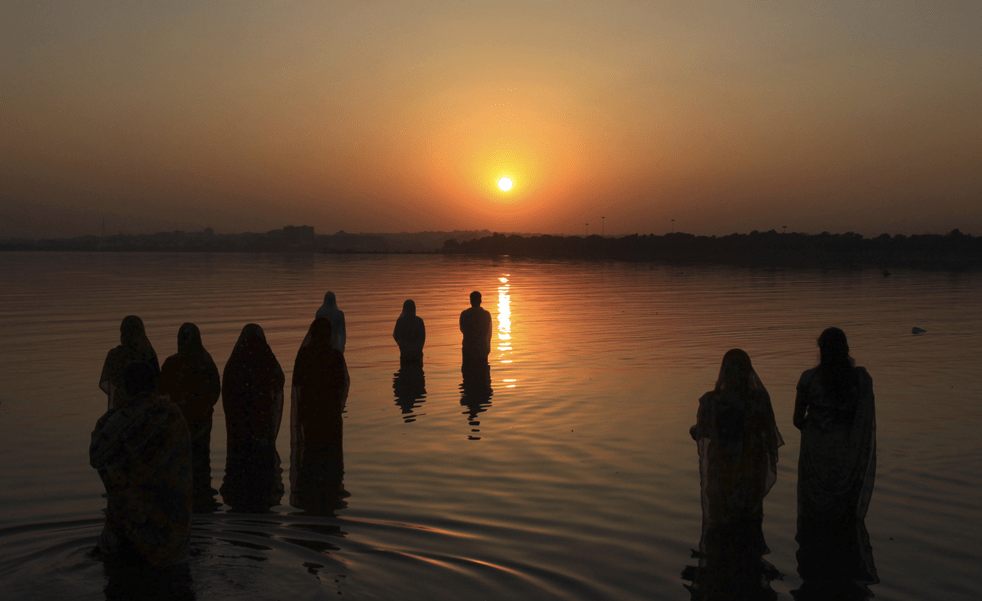
Devotees offer water to the setting sun, then the rising one. This duality honors both deities, seeking their combined grace.
Fruits and sweets in bamboo baskets symbolize abundance. The rigors of fasting test faith, promising fulfillment.
Integration with Other Indian Festivals
Chhath Puja follows Diwali, extending the festive season. It shares themes of light and prosperity, yet stands distinct in its austerity.
Influences from harvest festivals like Pongal echo in its gratitude motifs.
Overlaps with Solar Traditions
Across India, Surya worship appears in Makar Sankranti. Chhath’s unique focus on Shasthi differentiates it.
Tribal customs in Jharkhand infuse local flavors, merging with mainstream practices.
Blending of Cults and Beliefs
Mother goddess elements enhance Chhathi Mai’s role. This syncretism shows cultural evolution, adapting to diverse devotees.
Key Elements of Chhath Puja Celebrations
The four-day structure builds devotion progressively. Nahay Khay starts with purification, followed by Kharna’s evening fast.
Sandhya Arghya and Usha Arghya form the climax, with prayers at water edges.
Daily Rituals and Their Meanings
On day one, baths and simple meals cleanse body and mind. Day two involves cooking kheer, shared after sunset prayers.
Days three and four focus on sun offerings, standing in water for hours.
- Nahay Khay: Emphasizes hygiene and sattvic food.
- Kharna: Involves a strict fast broken with sweets.
- Sandhya Arghya: Honors the setting sun with songs.
- Usha Arghya: Welcomes the rising sun, ending the vrat.
These steps foster discipline and community bonds.
Major Legends Associated with Chhath Puja
Here’s a summary of key myths that shape the festival’s narrative:
| Legend | Key Figures | Core Theme | Source |
| Devasena’s Appearance | Priyavrat, Malini, Devasena | Child blessing and protection | Brahmavaivarta Purana |
| Sita’s Ritual | Rama, Sita | Atonement after exile | Ramayana |
| Karna’s Worship | Karna | Daily sun devotion | Mahabharata |
| Draupadi’s Vrat | Draupadi, Pandavas | Regaining kingdom | Mahabharata |
| Mother Goddess Birth | Chhathi Mai | Restoring harmony post-battle | Folk kathas |
| Kartik’s Marriage | Kartik, Devasena | Fertility union | Ganesa Khanda |
This table highlights how diverse tales converge in chhath puja story in english.
Lasting Impact on Society and Culture
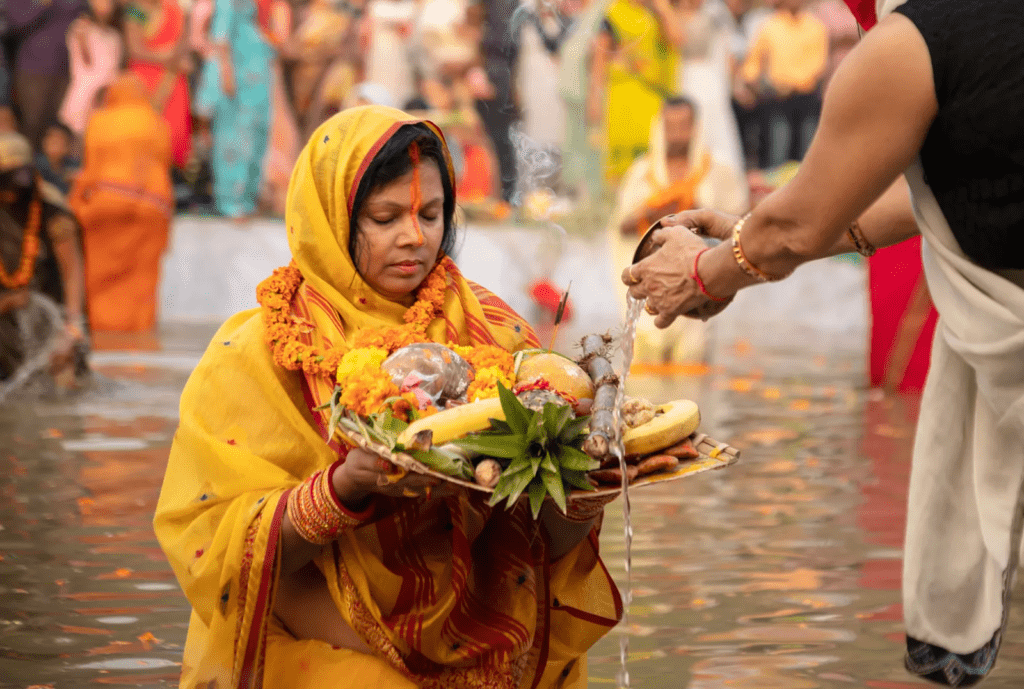
Chhath Puja strengthens social ties, with families reuniting annually. It promotes gender roles while evolving towards inclusivity.
Economically, it boosts local markets with sales of puja items.
Social and Communal Benefits
Gatherings at ghats encourage harmony. Songs and folklore pass traditions to younger generations.
Women lead, empowering them in ritual spaces.
Future Prospects and Preservation
As urbanization grows, efforts preserve authenticity. Cultural festivals showcase Chhath, educating wider audiences.
What keeps this ancient puja alive in today’s fast-paced world? Its blend of faith, nature, and community ensures relevance.
Chhath Puja weaves mythology, history, and daily life into a tapestry of devotion. From Devasena’s origins to harvest thanks, it offers profound insights.