
Kodagu, the hill country in Karnataka, is often described as a landscape of steep slopes, deep forests, and rain-fed valleys. In local memory it is more than a region; it is a homeland shaped by ecology and community. When people search for kodava caste, they usually want one clean origin story. Kodava history rarely offers that. The record is fragmented, and the strongest material often comes from oral tradition, daily practice, and scattered archaeological clues.
The challenge is simple to state and hard to solve: written documents are limited for early periods, while community memory is rich but not dated in modern terms. A professional approach treats both with care. It asks what can be verified, what remains plausible, and what should stay marked as अनुमान rather than fact.
Kodagu as a Landscape that Preserved Identity

Kodagu’s terrain shaped social continuity. Dense forests, heavy monsoon, and steep hills reduced easy outside control for long stretches. That setting matters when discussing kodava caste, because isolation can help a small community keep distinctive customs, dress, and local institutions.
At the same time, “isolation” never means “no contact.” Trade routes, seasonal movement, and political shifts brought people through the Western Ghats. So Kodagu can be seen as a region that filtered contact rather than blocked it, preserving certain traits while absorbing others.
Geography and Cultural Continuity
Many community practices become stable when they are tied to land use—farming cycles, hunting traditions, and shared rituals. In Hindi terms, यह भूमि-आधारित संस्कृति है, a culture shaped by terrain. That helps explain why Kodava customs could remain recognizable even when rulers changed.
A Small Community, a Large Historical Footprint
Accounts often describe Kodavas as a numerically small group, sometimes noted as not reaching even a lakh. Yet their public presence is larger than raw numbers, especially in military service and regional leadership. That contrast—small population, high visibility—often amplifies debates about origins.
Why Origins Are Hard to Pin Down
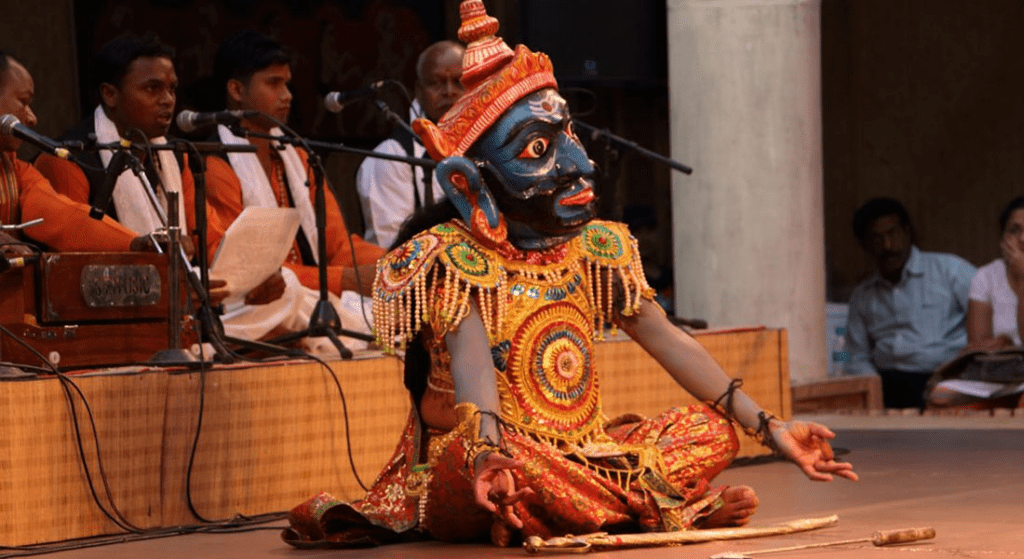
For many ethnolinguistic minorities, early history lives in songs, narratives, and ritual memory. Kodava tradition fits that pattern. Written records are scarce, and older inscriptions do not directly explain ethnic beginnings.
That gap is not a failure of the community. It is a normal pattern in Indian tribal and indigenous histories, where mainstream chronicles tend to focus on kings, wars, and capitals rather than local समाज.
Oral Tradition as Evidence, Not a Shortcut
Oral tradition can preserve real events, names, and migrations, but it rarely preserves dates with precision. A careful method treats oral memory as a map of meanings—what the community chooses to remember—then compares it with archaeology and external records.
Written Records Arrive Late and Uneven
Even when inscriptions mention Kodavas, they may describe alliances, conflicts, or local mobilization rather than origin. That means “first mention” is not “first existence.” For kodava caste, the question becomes: how far back can we trace continuity, even if we cannot name a single starting point?
Archaeology: Dolmens, Cairns, and What They Suggest
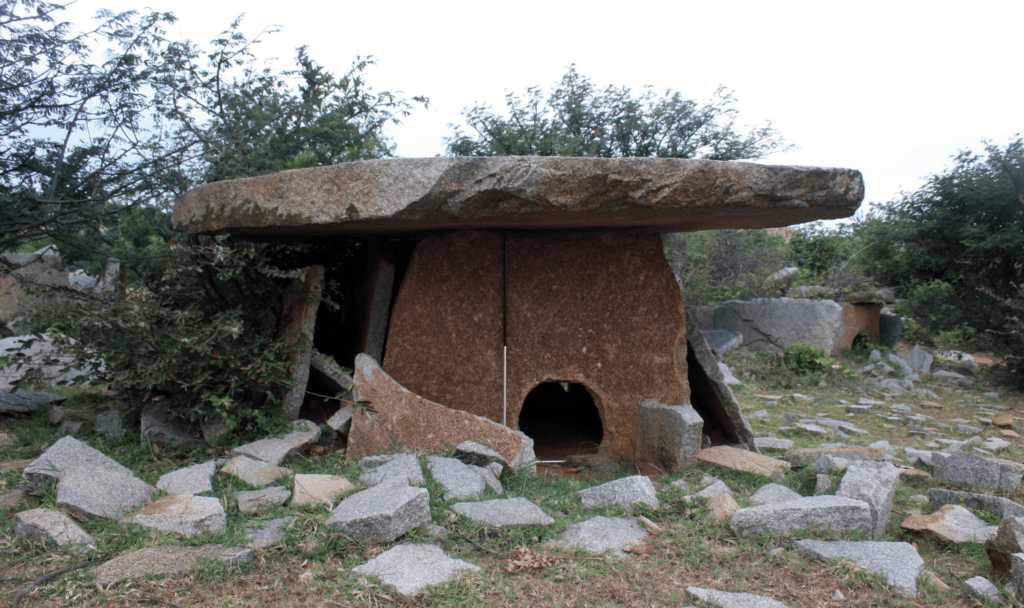
Kodagu has prehistoric burial sites often described as dolmens or cairns. Excavations have recorded stone chambers, pottery, bones, iron spearheads, beads, and traces of grain. These remains show organized burial practices and a community with tools, craft, and ritual structure.
The crucial limitation is attribution. Archaeology can reveal a way of life, but it cannot reliably label the people as Kodava, Yerava, Holeya, Kudiya, or another group without stronger connecting evidence.
What Dolmens Can Tell Us
Dolmens indicate a society with:
- Planned burial spaces and repeated ritual behavior
- Pottery traditions and iron implements
- Links between food production and funerary practice
This helps anchor Kodagu in deep time, even if it does not “solve” kodava caste origins.
What Dolmens Cannot Prove
Dolmens cannot, by themselves, prove ethnicity. They are evidence of presence, not identity. Any claim that “these burials are Kodava” should be treated as संभावना unless supported by additional material.
Theories of Origin: Why So Many Exist
Because evidence is partial, many theories have been proposed: indigenous origin, links to ancient civilizations, Indo-Scythian connections, Dravidian stock, or even associations with armies moving through India. Some theories emphasize martial orientation, arguing that hunting and warlike sports shaped community identity.
A strong historical approach does not pick the most dramatic theory. It asks what each theory explains well, and where it overreaches.
Martial Tradition and Social Memory
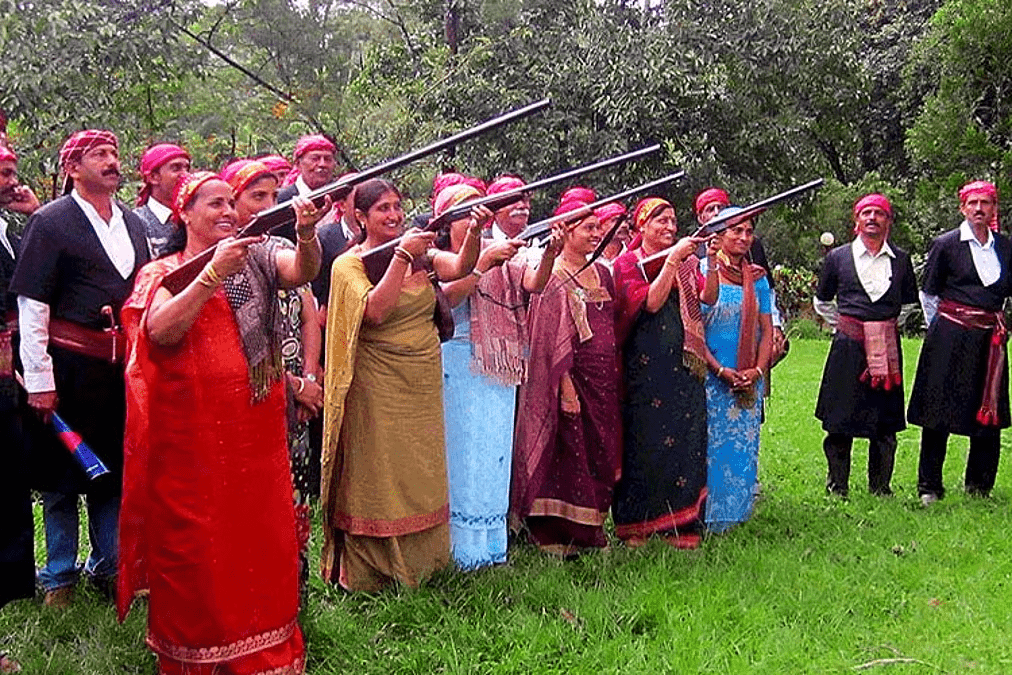
Martial reputation appears repeatedly in descriptions of Kodavas. It can reflect ecology—life in forested terrain demands resilience—and social organization. It can also reflect how outsiders framed Kodagu. For kodava caste debates, martial identity is often treated as a clue, but it is not a genetic proof.
Migration Theories and Their Weak Points
Migration theories often rely on broad physical descriptions or loose cultural parallels. Dress similarities, for example, can change with climate and time. Language borrowing can happen in any long-lived contact zone. These are interesting signals, but they are not decisive.
Evidence Checklist Used in Kodava History Research
Different evidence types carry different strengths. The table below is a practical way to read claims about kodava caste without getting pulled into certainty too fast.
| Evidence Type | What It Helps Explain | Common Risk |
| Oral songs and tales | Identity, values, remembered events | Dates become unclear |
| Inscriptions | Political presence, alliances, conflicts | Mentions can be late |
| Burial sites (dolmens) | Ancient habitation and ritual | Cannot label ethnicity |
| Language patterns | Contact history and evolution | Borrowing is normal |
| Physical anthropology claims | Past research perspectives | Often overgeneralized |
Inscriptions and a Medieval Snapshot
When inscriptions begin to mention Kodavas in local conflicts and mobilization, the picture becomes firmer. These records do not explain beginnings, but they show a community acting as a recognized force in Kodagu by the medieval period.
That matters for method. It shifts the discussion from “origin stories” to documented presence, even if the earliest centuries remain quiet.
What Inscriptions Can Confirm
Inscriptions can help confirm:
- Named local units and leadership structures
- Collective action in defence or alliance
- A public identity visible to outside powers
What Inscriptions Do Not Settle
They rarely describe ethnogenesis. They record outcomes—victory, donation, boundary—not the long process that formed a people.
Language Evidence Without Overreach
Kodava language is often pulled into origin debates. Some readers treat similarity to nearby Dravidian languages as a final answer. Others point to distinct features and argue for great antiquity.
A safer reading is simple: languages borrow. In a contact zone, shared words and sounds often signal long interaction, not a single “source.” भाषा का मिश्रण अक्सर संपर्क का संकेत होता है, निर्णय नहीं।
How Language Supports History
Used carefully, language can show:
- Layers of contact with neighbouring speech communities
- Vocabulary linked to trade, farming, and governance
- Local innovation that hints at long settlement
Why Literature Is Not the Only Measure
A language can be old even if much of its tradition is oral. Writing, patronage, and schooling shape literature; age alone does not.
Reading Kodava Identity With Care

Online, the label kodava caste is common, but it can flatten a complex identity into a single box. Social life in Kodagu is shaped by kinship, local institutions, and ritual practice—समाज की अपनी संरचना—alongside wider Indian categories.
If you want a strong takeaway, keep one rule: bold origin claims need bold evidence. The best reading leaves room for uncertainty without turning it into confusion.
A Practical Method for Evaluating Claims
- Start with the solid base: geography, archaeology, inscriptions
- Add oral tradition as cultural meaning, not as exact dates
- Treat migration theories as hypotheses, not conclusions
- Prefer explanations that fit multiple evidence types at once