What Is कुम्भ मेला?
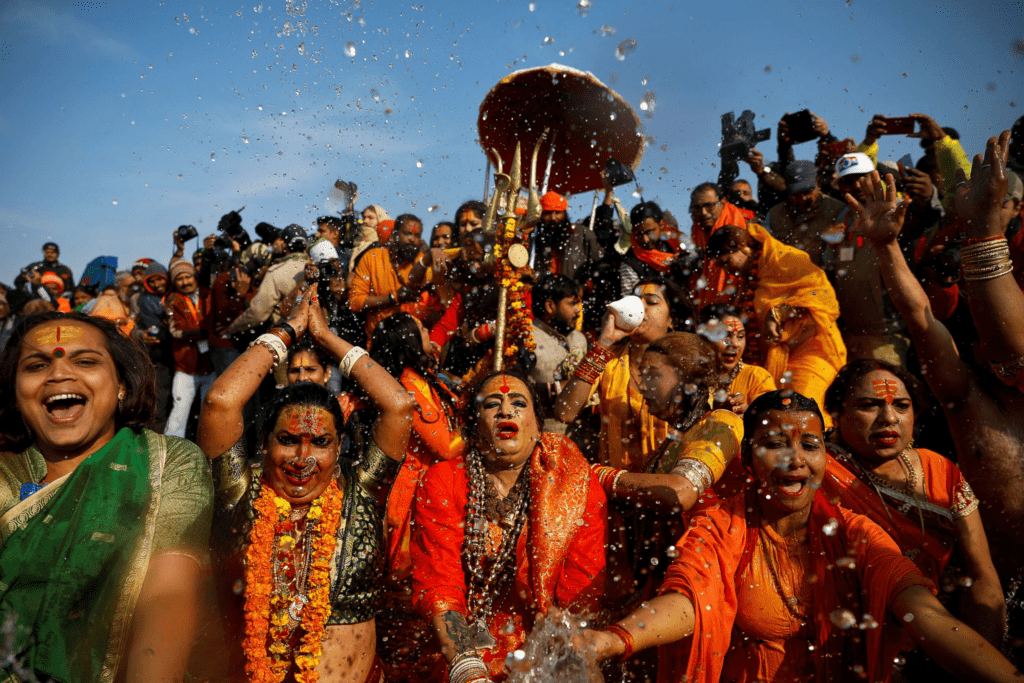
India’s कुम्भ मेला (Kumbh Mela) is more than a festival. It is a saamaajaik utsav (सामाजिक उत्सव), a social ritual of cosmic scale that brings together millions of people from all walks of life for sacred bathing (snan), spiritual debate, and cultural expression.
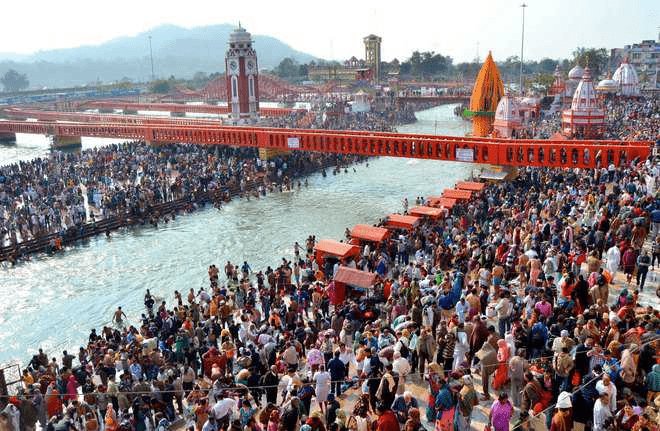
Held at four key riverbanks—Prayagraj, Haridwar, Ujjain, and Nashik—the Kumbh Mela rotates every 12 years, aligned with planetary positions described in Vedic astrology. It is the largest peaceful gathering on Earth, recognized by UNESCO as intangible cultural heritage.
But beyond the numbers lies a deeper truth: the Kumbh is a mirror of Indian society, layered with rituals (अनुष्ठान), traditions (परंपराएं), and unspoken social rules that have evolved over centuries.
The Mythological Origins of Kumbh
Ever wondered why the word Kumbh (कुम्भ) means “pot”? According to Hindu Puranas, the gods and demons once churned the ocean (samudra manthan) in search of amrit — the nectar of immortality. In the struggle, drops of amrit spilled at four sacred locations, where the Kumbh is now celebrated.
- Haridwar (हरिद्वार) – on the banks of the Ganga
- Prayagraj (प्रयागराज) – confluence of Ganga, Yamuna, and Saraswati
- Ujjain (उज्जैन) – on the banks of the Shipra river
- Nashik (नासिक) – along the Godavari river
These spots are not random—they are cosmic energy points, each chosen based on astrological configurations involving Jupiter (गुरु), the Sun (सूर्य), and the Moon (चंद्रमा).
MahaKumbh and ArdhKumbh: The Sacred Calendar
Did you know that not all Kumbhs are equal?
| Type of Mela | Frequency | Location | Description |
| महाकुंभ मेला (MahaKumbh) | Every 144 years | Prayagraj only | The rarest and most sacred |
| पूर्ण कुंभ (Purna Kumbh) | Every 12 years | Rotates among 4 sites | Full-scale Kumbh |
| अर्धकुंभ (Ardh Kumbh) | Every 6 years | Only at Prayagraj and Haridwar | Half-Kumbh |
| माघ मेला (Magh Mela) | Annual | Prayagraj | Considered a mini-Kumbh |
Each version of the mela brings millions to sacred rivers for ritual bathing, which is believed to cleanse sins and free the soul from rebirth.
Social Dimension of the Kumbh Mela
Why is it called a saamaajik utsav (सामाजिक उत्सव) and not just a spiritual one?
Because it functions like a parallel society:
- Temporary cities are built with streets, hospitals, police stations
- People from all castes, genders, and regions coexist
- अखाड़ा (Akhara) saints parade in symbolic hierarchy
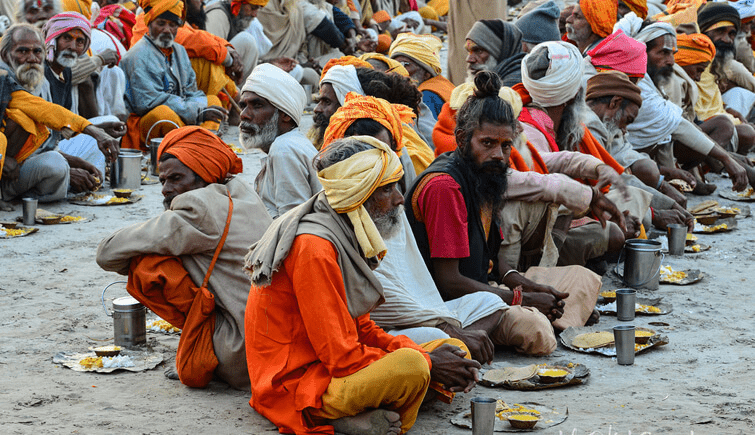
- Langars feed all—rich and poor, local and foreign
- Families camp for weeks, sharing stories, rituals, and silence
The kumbh is not a tourist spectacle—it’s a living tradition of Indian democracy in action, without voting booths.
Aspects of Social Harmony
- Inclusivity: No ticket, no gate—open for all
- Spiritual Marketplace: Where gurus, teachers, and pilgrims meet
- Inter-generational bonding: Grandparents bring children into sanskriti
- Knowledge Transfer: Public discourses (pravachan, katha) by scholars
Bathing Rituals and Their Symbolism
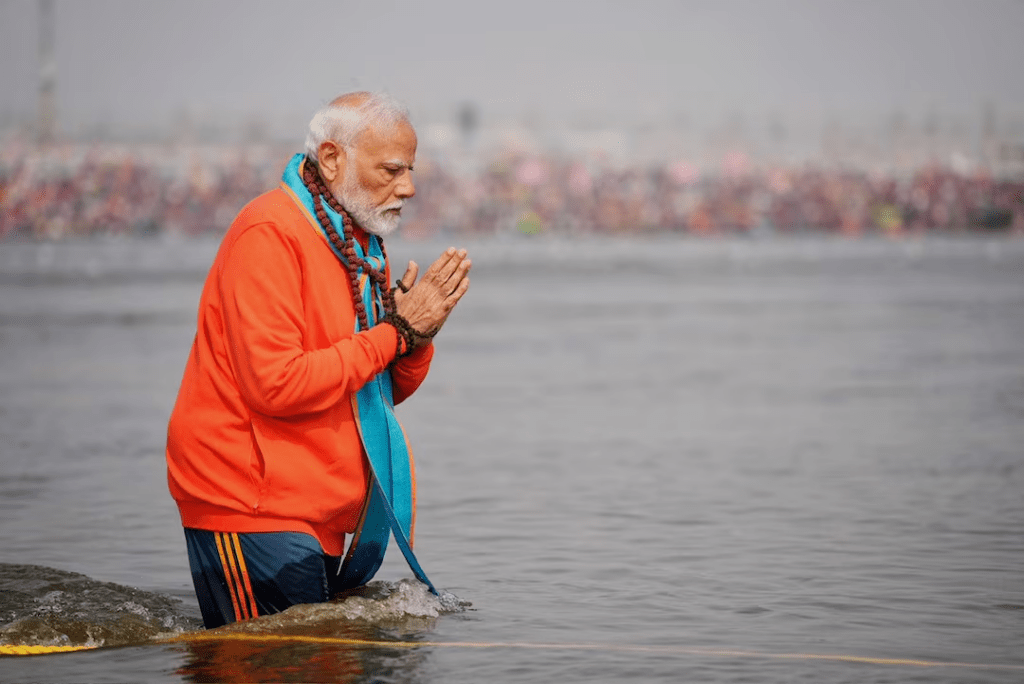
The centerpiece of every Kumbh is the shahi snan (royal bath). Timed by astrologers, it marks the most auspicious moment for spiritual purification.
On these days, monks from the 13 recognized akharas march in with elephants, drums, and saffron flags—followed by millions of devotees who immerse in the river with folded hands and silent prayers.
This collective bath is not about hygiene—it’s about harmony.
“Snan is where ego dissolves, and society becomes water.”
Cultural Programs and Symbolic Performances (कार्यक्रम और सांस्कृतिक दृश्य)
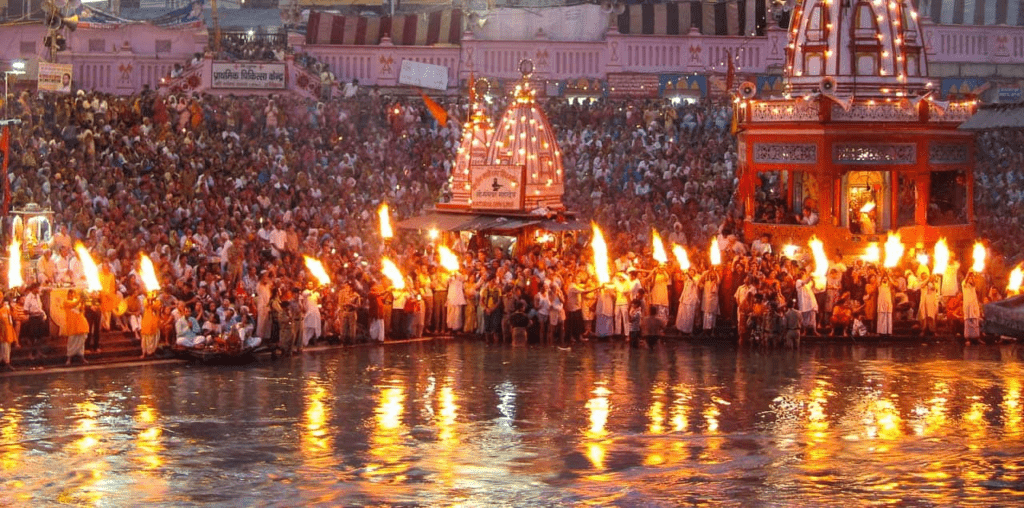
Beyond bathing, कुम्भ मेला thrives on performance. Folk artists, temple dancers, bhajan groups, tribal musicians—every camp becomes a stage. These aren’t random entertainments, they are vehicles of shared memory.
You may find:
- Kathputli puppet shows narrating ancient epics
- Nukkad Natak (नुक्कड़ नाटक) — street theatre about social issues
- Bhajan Sandhya under starlight, uniting strangers in song
- Yog Shivirs and public Vedic chanting at sunrise
Even schoolchildren and university groups now perform cultural programs (sanskritik karyakram) to bridge tradition with modern India.
A Modern Kumbh: Tech and Transformation
The kumbh is now not only spiritual—it is smart.
In 2019 at Prayagraj, the government introduced:
- AI-powered crowd control
- Real-time geo-tagged maps
- Drone surveillance and sanitation tracking
- Kumbh Mela mobile apps in multiple Indian languages
- Free Wi-Fi zones, clean toilets, and solar energy grids
This blending of ancient belief with modern technology makes kumbh one of the most adaptive festivals in the world.
“When dharma meets data, pilgrims walk safely through the cosmic tide.”
Kumbh and the Indian Economy
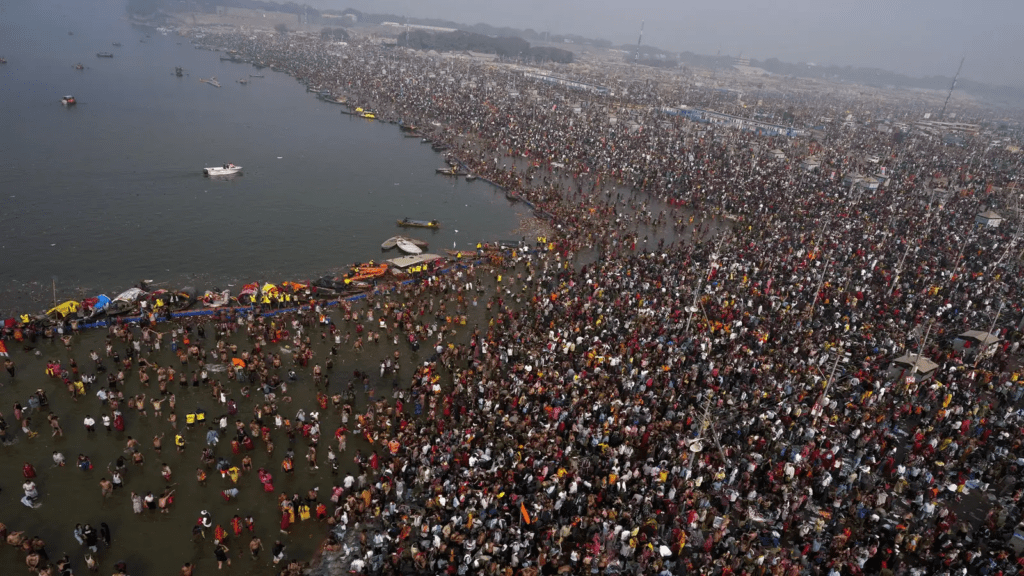
Is the Kumbh just a spiritual event? The numbers say otherwise.
| Sector | Estimated Impact (INR) | Description |
| Hospitality & Tourism | ₹12,000 crore+ | Hotels, food, transport |
| Religious Goods | ₹3,000 crore+ | Rudraksha, puja items, books |
| Handicrafts & Arts | ₹1,500 crore+ | Folk arts, handlooms |
| Technology & Services | ₹800 crore+ | Apps, surveillance, analytics |
| Employment Generated | 600,000+ jobs | From tea vendors to translators |
कुम्भ मेला is an economic ecosystem that empowers small traders, regional artisans, and rural workers.
Beyond Religion: A Collective National Emotion
Kumbh Mela is not exclusive to Hindus. While rooted in Sanatan Dharma, it becomes a stage of national emotion. People of other faiths often attend, volunteer, photograph, or study it.
Why? Because the kumbh is:
- A testament to India’s pluralism
- A ritual of water, not war
- A statement of non-commercial unity
- An act of faith in the public sphere
Comparison with Other Festivals
| Festival | Focus | Frequency | Location(s) | Social Nature |
| Diwali | Light/Wealth | Annual | Pan-India | Family-centric |
| Holi | Joy/Color | Annual | North-Central India | Youth, playful |
| Eid | Charity/Fasting | Bi-annual | Across India | Inter-community |
| Durga Puja | Power/Culture | Annual | Bengal, Assam | Regional pride |
| कुम्भ मेला | Moksha/Unity | 6–12 yrs | 4 sacred rivers | All-caste, all-age |
Why Kumbh Endures
What makes the कुम्भ मेला survive across millennia?
Not money.
Not government orders.
Not tourism boards.
It survives because it is a ritual of memory. A social and cosmic alignment where even the poorest Indian becomes part of a timeless procession.
“People don’t go to Kumbh to change themselves. They go to remember who they already are.”
Features of कुम्भ मेला
| Element | Details |
| Frequency | MahaKumbh (144 yrs), Purna (12), Ardh (6) |
| Locations | Prayagraj, Haridwar, Ujjain, Nashik |
| Main Ritual | Shahi Snan (Royal Bath) |
| Key Participants | Akharas, Sadhus, Pilgrims, Families |
| Languages Spoken | Hindi, Sanskrit, Urdu, Bhojpuri, Bengali |
| Government Involvement | High — logistics, health, infrastructure |
| Global Attention | UNESCO-listed, global scholars, journalists |