
Lal Qila, known globally as the Red Fort, stands at the northern edge of Shahjahanabad, shaping Delhi’s historical core. Built in the seventeenth century, this fortified palace was designed not only as a royal residence but as a statement of power, order, and imperial vision. When travelers search for lal qila or red fort tickets, they are often seeking more than entry details. They want to understand what this place represents and how to experience it properly.
From its red sandstone walls to its marble palaces, Lal Qila reflects a carefully planned city within walls. The fort was positioned along the Yamuna, integrating water, gardens, and architecture into a single spatial idea. In Hindi, it is often described as सत्ता और संस्कृति का संगम, a meeting point of authority and culture.
The Foundation of Lal Qila and Shahjahanabad
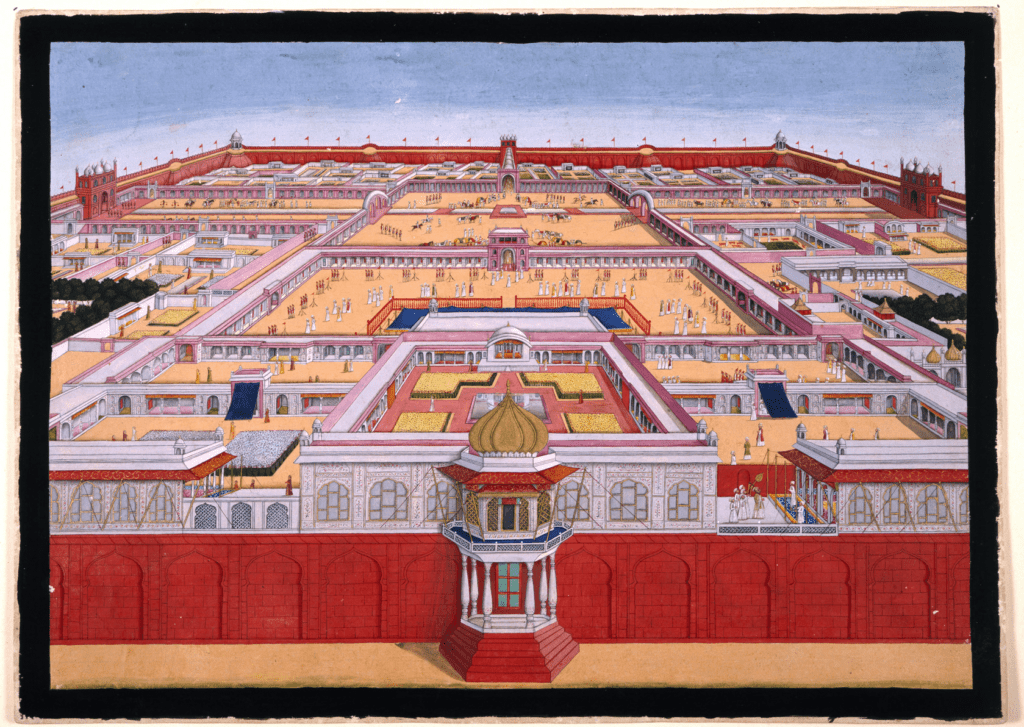
The construction of Lal Qila began after the Mughal capital moved from Agra to Delhi. This shift was not symbolic alone. It marked the creation of a new urban center with the fort as its heart. The layout shows deliberate planning, with long walls, bastions, and controlled gates.
The fort’s structure differs from earlier forts because it reflects lessons learned elsewhere. Unlike purely defensive complexes, Lal Qila combined ceremony, governance, and daily life. This approach explains why visitors often feel that the fort reads like a city rather than a single monument.
Gates and Urban Control
Lal Qila originally had multiple gates, but two remain central to visitor experience:
- Lahori Gate on the west
- Delhi Gate on the south
These gates regulated movement and symbolized controlled access to power. Even today, entry routes shape how visitors perceive space and authority.
Red Sandstone and Marble Contrast
The outer walls use red sandstone, projecting strength and permanence. Inside, marble dominates palaces and halls, signaling refinement. This contrast is one reason red fort photos often focus on interior details rather than walls alone.
Chhatta Chowk and the Experience of Arrival
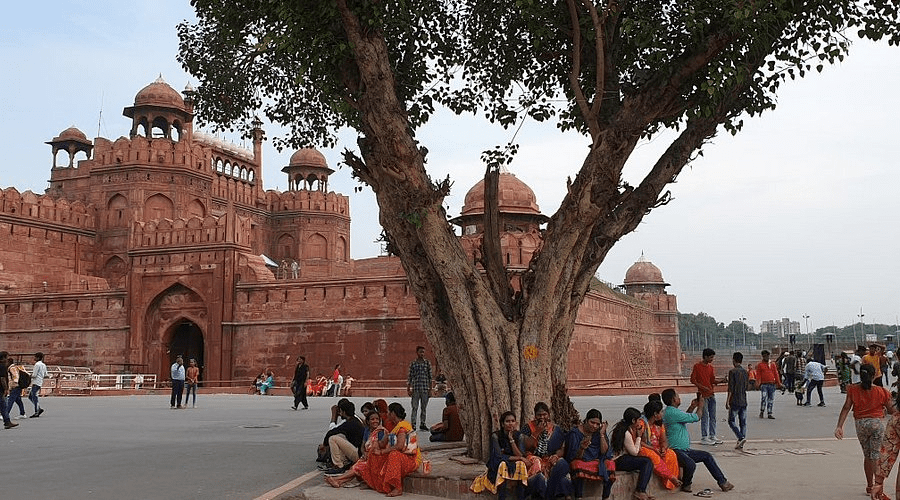
Entry through the western side leads into Chhatta Chowk, a covered arcade once used by royal merchants. This space softened the transition from public street to imperial court. For modern visitors, it still sets the tone before reaching the main halls.
From here, one reaches the Naubat Khana, where ceremonial music once announced arrivals. Today, this structure helps orient visitors before moving deeper into the fort.
Diwan-i-Am: Public Audience and Authority
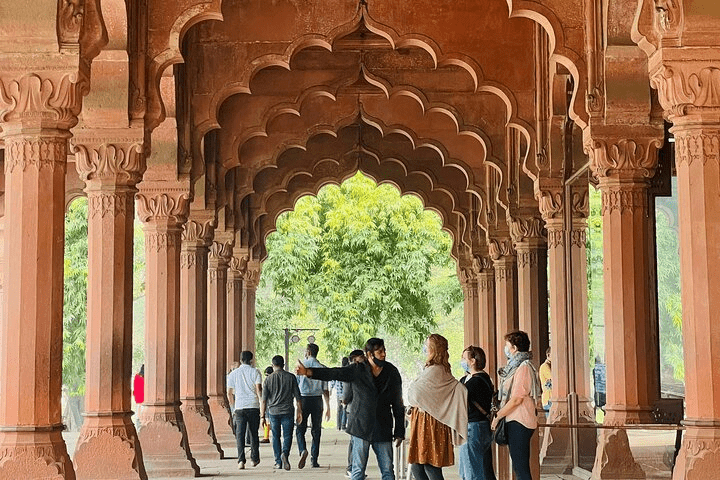
The Diwan-i-Am was designed for interaction between ruler and subjects. Its open arches and raised throne space emphasized visibility and order. The layout communicated hierarchy without isolation.
Behind the throne area, decorative panels once reinforced imperial imagery. Even without elaborate explanation, the space communicates its function clearly. This hall helps explain why Lal Qila is remembered as a working seat of power, not only a palace.
Palaces Along the Eastern Front
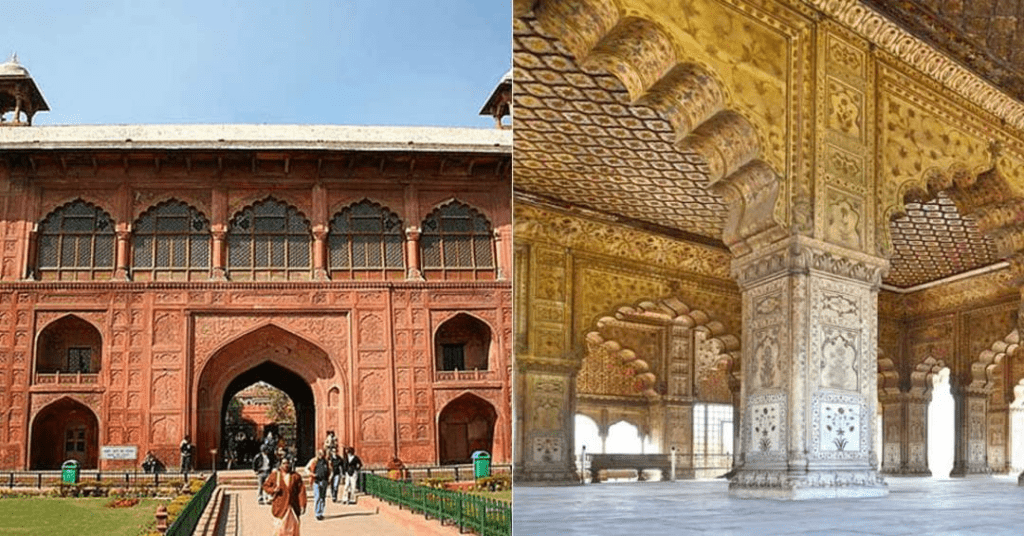
Behind the public halls lies a sequence of palaces aligned with water channels. The Nahr-i-Bihisht, or Stream of Paradise, connected these spaces, blending architecture with controlled flow.
Key structures include:
- Rang Mahal, known for its interior decoration
- Mumtaz Mahal, now adapted for exhibition use
These spaces highlight how water and shade shaped comfort and symbolism. For many visitors, these interiors dominate red fort photos due to their light and proportion.
Diwan-i-Khas and Private Power
The Diwan-i-Khas was reserved for select audiences. Its pillars, arches, and decorative work show a more intimate expression of authority. This space once held symbols of exceptional prestige.
Unlike the public hall, this area speaks softly. Power here was controlled, limited, and selective. The contrast between Diwan-i-Am and Diwan-i-Khas is essential to understanding Mughal governance.
Sacred and Daily Spaces Within the Fort
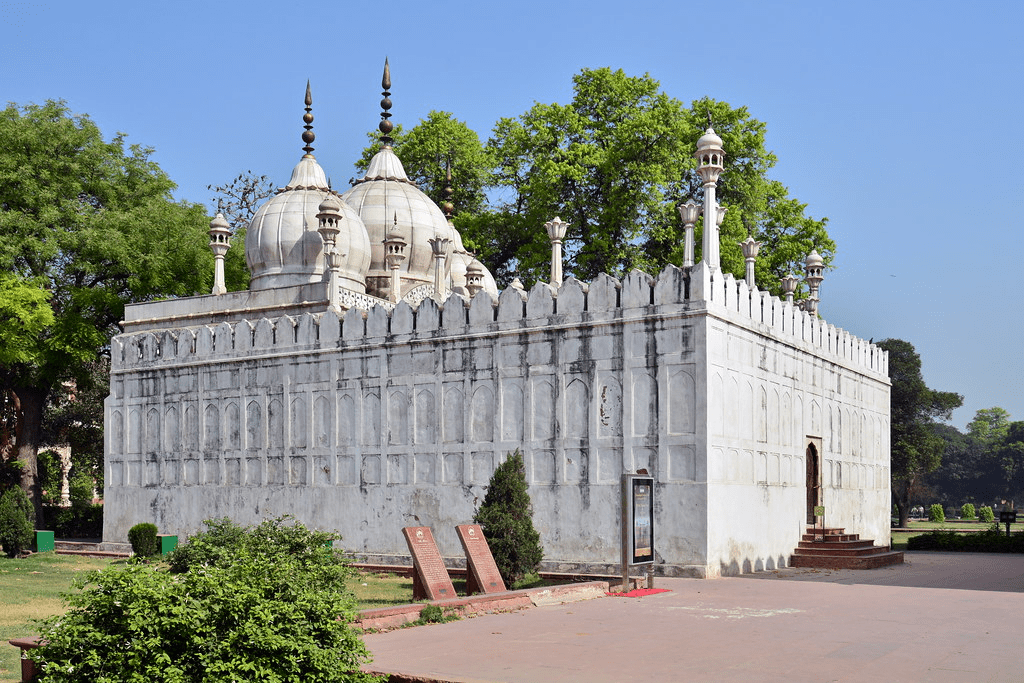
Lal Qila was not only ceremonial. It included prayer spaces, private chambers, and baths. The Hammam shows advanced planning for comfort, with marble surfaces and water control.
Nearby stands the Moti Masjid, added later, reflecting continuity of religious practice within the fort. Gardens like Hayat-Bakhsh-Bagh balanced built form with open space, reinforcing the idea of harmony.
Visiting Lal Qila Today: Practical Details
Most visitors now plan their visit around timing and access. Questions like red fort timings or red fort opening time are common. While schedules can vary, the structure of a visit remains similar.
Key planning points usually include:
- Entry through Lahori Gate
- Security checks before access
- Walking routes through halls and gardens
Many travelers also search for red fort open today to avoid disappointment during holidays or maintenance periods.
Tickets and Access Planning
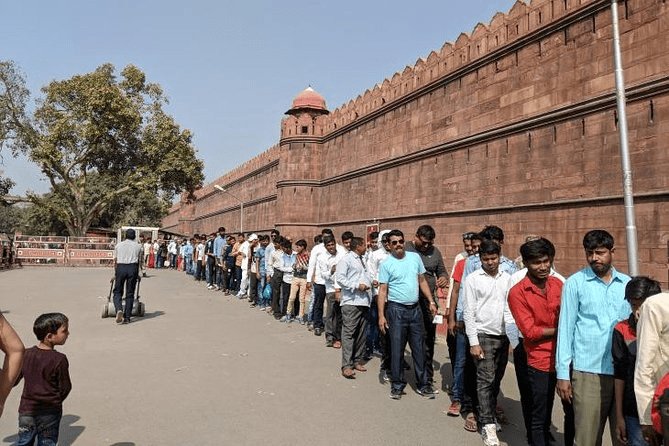
Interest in red fort ticket options has grown with online booking. Visitors often look for red fort online ticket or lal quila ticket to reduce waiting time. Understanding entry flow helps avoid congestion and rushed visits.
Typical concerns include:
- red fort tickets availability
- red fort closing time for exit planning
- differences between red fort ticket and lal qila ticket naming
These practical elements shape the visitor experience as much as history itself.
Red Fort Timings and Daily Access Rhythm
Understanding red fort timings helps visitors experience Lal Qila without rush. The fort follows a daily rhythm shaped by light, crowd flow, and security checks. Morning hours feel quieter and cooler, while afternoons bring larger groups. Many travelers ask about red fort opening time to plan photography and walking routes.
Typical planning considerations include:
- Arriving early to cover interiors with fewer crowds
- Allowing time buffers near red fort closing time
- Checking if red fort open today aligns with local observances
In Hindi travel conversations, this planning is often called सही समय का चयन, choosing the right time.
Tickets, Queues, and Smart Entry
Interest in red fort tickets has shifted toward convenience. Visitors now commonly search for red fort online ticket options to avoid queues. Whether labeled as red fort ticket, lal qila ticket, or lal quila ticket, the purpose remains the same: smooth entry.
To reduce waiting and fatigue:
- Secure tickets in advance when possible
- Carry valid identification if required
- Enter through designated gates as directed
This approach keeps the visit focused on exploration rather than logistics.
Photography and Visual Memory
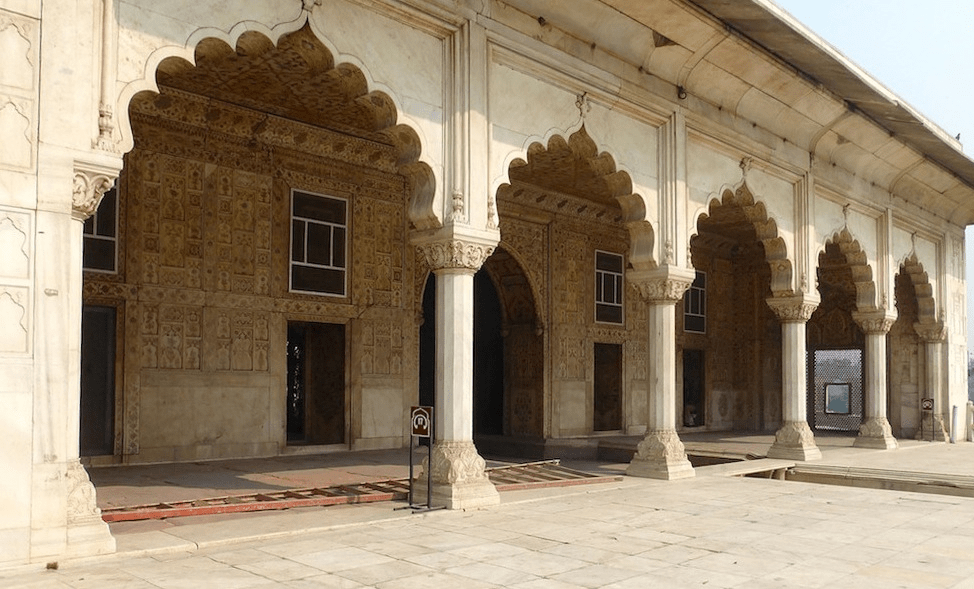
Red fort photos capture more than architecture; they record scale, texture, and light. The fort’s red sandstone reacts differently across the day, while marble interiors soften shadows. Photography-friendly zones vary, so patience pays off.
Popular visual themes include:
- Long perspectives of halls and arches
- Reflections near water channels
- Details of carved panels and columns
These images often become a visitor’s strongest memory, connecting place and emotion.
A Walk Through Power and Daily Life
Walking through Lal Qila reveals how power was staged and lived. Public halls open outward; private chambers turn inward. This spatial logic helps visitors read history without explanation boards.
As you move from gate to garden, notice transitions:
- From noise to quiet
- From stone to marble
- From public display to private control
This flow explains why Lal Qila feels coherent rather than fragmented.
Lal Qila in National Memory
Beyond tourism, Lal Qila occupies a central place in public memory. It appears in ceremonies, textbooks, and visual culture. The fort bridges imperial past and civic present. In Hindi, it is often described as राष्ट्रीय स्मृति का प्रतीक, a symbol of national memory.
This layered role shapes expectations. Visitors arrive not only to see ruins, but to engage with continuity.
Comparing Key Visitor Details at a Glance
| Aspect | What to Know |
| Entry Name | Lal Qila / Red Fort |
| Main Access | Lahori Gate |
| Tickets | red fort tickets, red fort online ticket |
| Best Time | Morning for space and light |
| Photos | Interiors and arches |
This overview helps align planning with experience.
Planning a Meaningful Visit
A meaningful visit balances curiosity with pacing. Allocate time for pauses, shade, and observation. Ask yourself simple questions as you walk: What was public here? What was private? Who could enter, and who waited outside?
Such questions transform a checklist visit into an engaging walk through history.
Why Lal Qila Endures
Lal Qila endures because it combines clarity and complexity. Its walls speak plainly; its interiors whisper stories. Visitors leave with a sense of scale and restraint. The fort does not overwhelm; it invites attention.
If history is best understood through space, Lal Qila offers a clear lesson—architecture can carry memory forward, one step at a time.