
Ellora Caves, nestled in Maharashtra, draw visitors from around the world with their stunning rock-cut architecture. Locally called Verul Leni or वेरुल लेनी, these caves sit about 30 kilometers from Aurangabad along the road to Chalisgaon. This massive complex stands as one of the largest monastic-temple sites carved from stone anywhere on the planet.
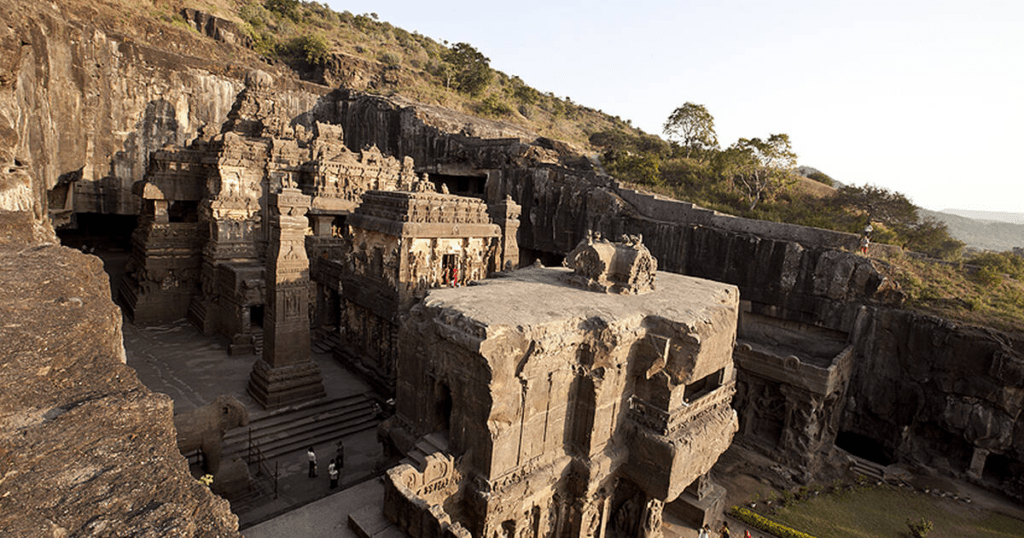
What makes Ellora truly special? It’s home to the Kailasa Temple in Cave 16, the biggest single-piece rock excavation ever created. Picture ancient artisans chiseling away at solid basalt to form intricate halls and sculptures. The best time to see this wonder comes during the monsoon, when rains fill streams and turn the landscape into a vibrant green paradise. Local folks flock here then, eager to witness nature’s full glory.
Geologically, Ellora Caves emerge from the Deccan Traps, volcanic basalt layers that look like steps— the word “trap” comes from Scandinavian roots describing these formations. Weathering has shaped flat-topped terraces, and near Cave 32, you spot old lava channels with a reddish-brown hue from intense heat.
Geological Foundations of Ellora
The hills housing Ellora Caves belong to the Sahyadri range, rising sharply from plains to the south and west. These date back to the Cretaceous period, around 65 million years ago. Streams like the Elaganga flow through, feeding into the Godavari River. During rains, a nearby barrage releases water that cascades dramatically at Sita-ki-Nahani near Cave 29.
Multiple lava flows created horizontal layers mixed with bubbly vesicular beds. Joints run vertically and horizontally, varying the rock’s texture from coarse to fine-grained. Ancient builders picked the finest spots for carving, using natural cracks to ease their work. Basalt starts soft when first cut but hardens with air exposure, perfect for such grand projects.
This rock type encouraged settlements by various faiths. Maharashtra boasts about 1,200 caves total, with 900 tied to Buddhism alone. Ellora’s spot made it ideal for monks and devotees seeking isolation yet accessibility.
Ancient Human Presence in the Region
People have lived here for ages. Stone tools from the Upper Palaeolithic era, 10,000 to 20,000 years back, show early hunters. Mesolithic finds under 10,000 years old continue the story, and Chalcolithic sites from 2,500 to 1,000 BC prove ongoing habitation.
Coins from the Satavahana dynasty, who ruled from the early Christian era, highlight Ellora’s early importance. Their capital at Pratishtana—now Paithan—oversaw vast lands from the Arabian Sea to the Bay of Bengal, up to the Narmada River.
Trade Routes and Early Influences
Ellora lay on key trade paths linking western ports like Sopara, Kalyan, and Chemula to inland hubs such as Paithan, Ter, and Bhokardan. Satavahana inscriptions at nearby Nasik and Pital Khora caves confirm their presence. The route ran from Pratishtana through Aurangabad, Ellora, Pital Khora, to Nasik, a crossroads for north-south and east-west commerce.
Yet, during Satavahana times, no major work started at Ellora. Activity buzzed at Pital Khora, Nasik, and Ajanta instead. As religious sites multiplied across Maharashtra, Ellora’s prime location drew attention eventually.
Have you ever wondered how three faiths could thrive side by side in one spot? That’s Ellora’s magic— a hub for Buddhism, Brahmanism, and Jainism from the 6th to 12th centuries AD.
Evolution of the Cave Complexes
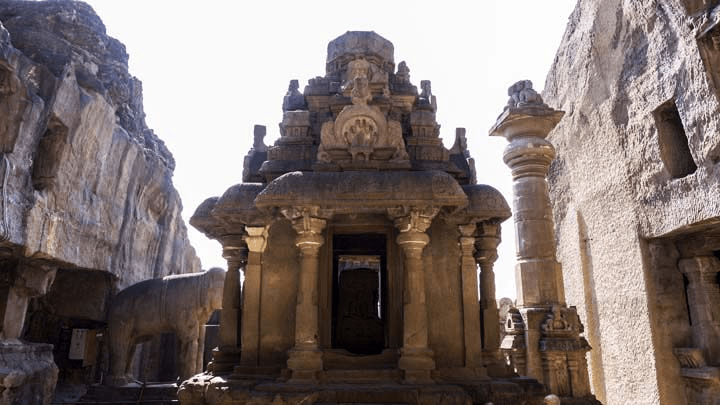
Out of nearly 100 caves in the hills, 34 stand out and attract tourists. Caves 1-12 focus on Buddhism, 13-29 on Brahmanism, and 30-34 on Jainism. Extra groups like Ganesh Leni and Jogeshwari Leni sit on the Elaganga and upper terraces.
Royal support likely came from various rulers, though few inscriptions survive. One from Rashtrakuta king Dantidurga in Cave 15 dates to 753-757 AD. The grand Kailasa in Cave 16 credits to his successor, Krishna I, around 757-783 AD.
A copper plate from Karka II in 812-813 AD praises Kailasa’s splendor, saying even gods marveled at it, mistaking it for something divine, not human-made. The architect himself stood amazed. Unlike Ajanta or Nasik, Ellora lacks many such records.
Dynastic Patronage Through the Ages
Without direct proofs, historians link early caves to Kalachuris from Mahismati, who controlled areas around Nasik and Asmaka, including Bhokardan. Chalukyas of Badami briefly held sway before Rashtrakutas rose.
Most Brahmanical caves and later Buddhist ones tie to Rashtrakutas, showing their tolerance. Jaina caves came after, under Kalyani Chalukyas and Yadavas of Deogiri (Daulatabad). Yadava finds at Daulatabad include Jaina sculptures, confirming support for that faith.
Ellora symbolizes harmony among religions, all in one place.
Continuous Discovery and Visits
Unlike Ajanta, hidden for centuries, Ellora stayed known thanks to its trade route spot. Records from travelers abound. Arab geographer Al-Mas’udi noted it in the 10th century. In 1352, Sultan Hasan Gangu Bahmani fixed roads and camped here.
Later accounts come from Firishta, Thevenot in the 1600s, Niccolao Manucci, Charles Warre Malet in 1794, and Seely in 1824. In the 19th century, Holkars of Indore owned the site, auctioning worship rights and fees.
Modern Management and Preservation
After Holkars, Nizams of Hyderabad took over, repairing through their archaeology team with Archaeological Survey of India guidance. Post-reorganization, the Survey maintains it within Maharashtra.
This care keeps Ellora Caves accessible today.
Planning Your Visit to Ellora Caves
Tourists can tailor trips based on time. With 3-4 hours, hit Cave 10 (Visvakarma), 16 (Kailasa), 21 (Ramesvara), and 32-34 (Jaina). This covers all faiths.
For a full day, add Buddhist Caves 2, 5, 10, 12; Brahmanical 14, 15, 16, 21, 29; and Jaina 32-34.
The caves stretch 2 kilometers north-south in a semi-circular scarp— Buddhists south, Jainas north, Brahmanicals center.
Why not plan around Ellora Caves tickets? Entry fees vary, but they’re affordable for such heritage.
| Cave Group | Number of Caves | Religious Affiliation | Key Highlights |
| Buddhist | 1-12 | Buddhism | Chaitya halls, viharas, intricate carvings |
| Brahmanical | 13-29 | Hinduism | Kailasa Temple, Shiva shrines, epic reliefs |
| Jaina | 30-34 | Jainism | Tirthankara statues, detailed pillars |
This table summarizes the main groups for quick reference.
Architectural Marvels in Detail
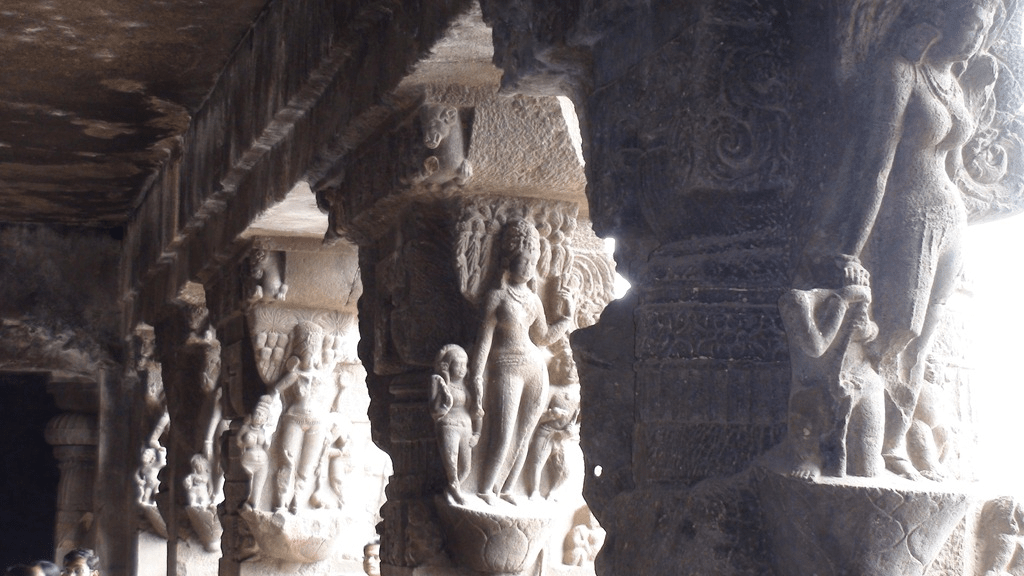
Each cave tells a story through its design. Buddhist ones feature chaityas for worship and viharas for living. Take Cave 10, with its massive stupa and vaulted ceiling echoing ancient chants.
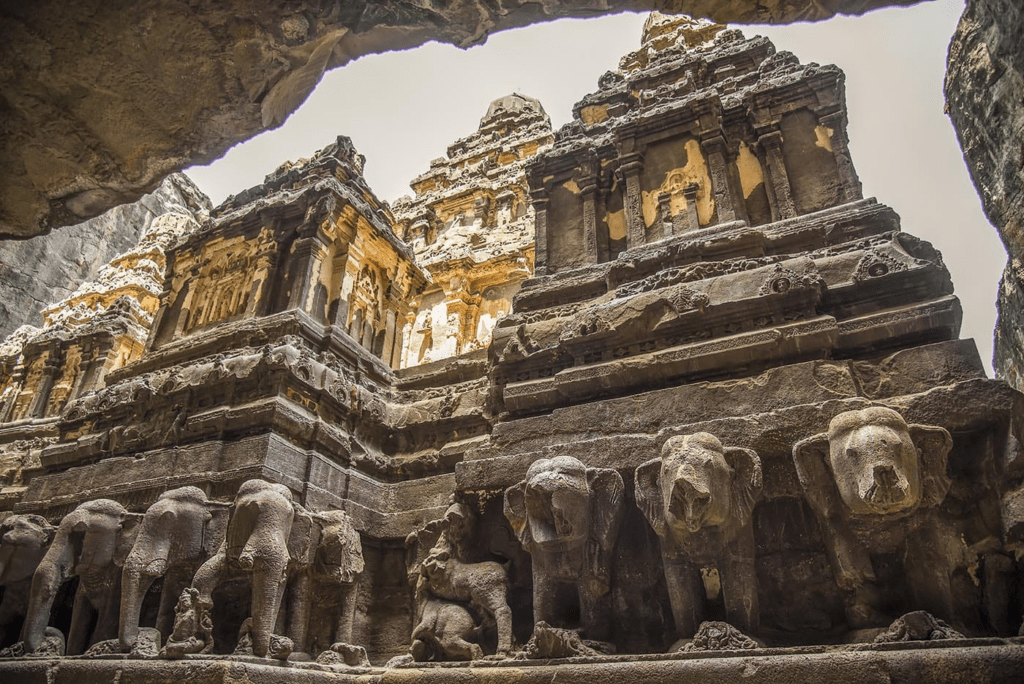
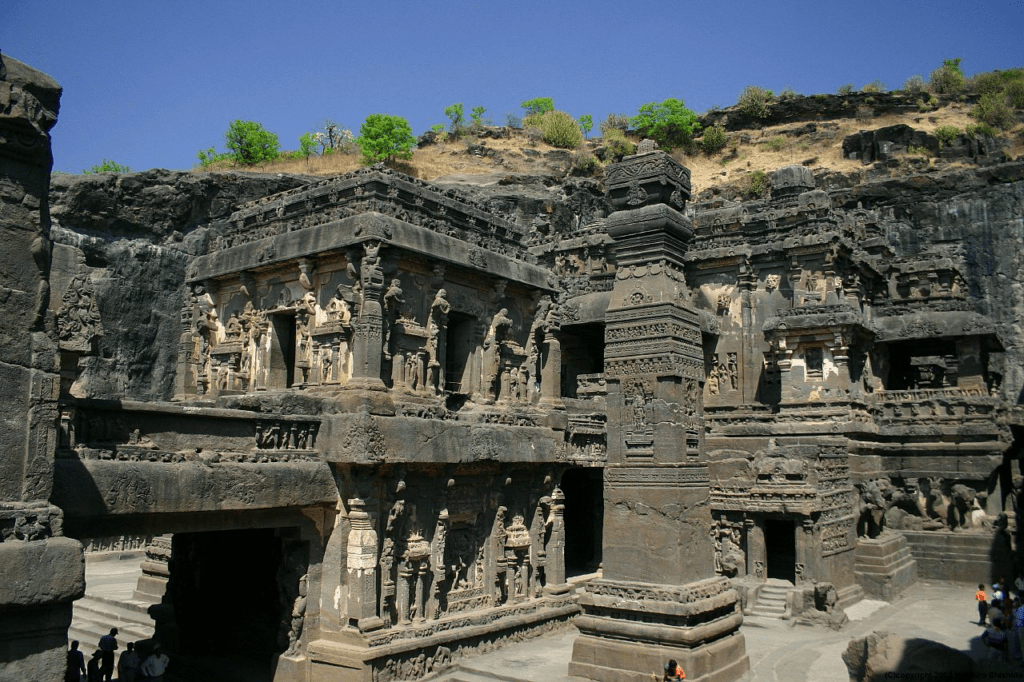
Brahmanical caves burst with Hindu myths. Kailasa stands out, carved top-down from one rock, mimicking Mount Kailash.
Exploring Buddhist Caves
The Buddhist group begins with basic viharas. These serve as living areas for monks. As you go further, the caves become grander. They include chaitya halls for worship.
Take Cave 5 as an example. It acts as a large hall. Monks met there for lessons. The pillars look plain but strong. Small cells line the sides. Monks rested in them.
Cave 12 stands out. Locals call it Tin Tal. It rises three levels high. Each floor features Buddha statues. They display various hand gestures. Bodhisattvas appear around them.
Key features in these Buddhist caves include:
- Viharas for monks to live and learn.
- Chaityas with central stupas for prayers.
- Carvings depicting Buddha’s life and past births.
- Pillars often topped with lotus motifs.
These elements reveal how Buddhism spread across the area.
Highlights of Brahmanical Caves
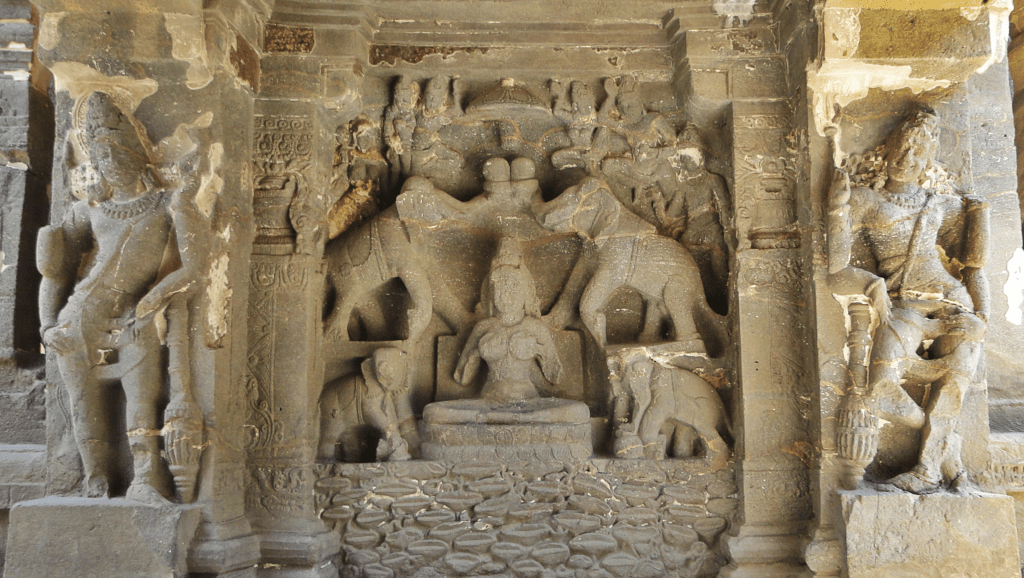
Hindu caves feel alive with energy. They display gods and tales from ancient epics. Walls burst with scenes from Ramayana and Mahabharata.
Cave 14 focuses on Ravana. It captures him attempting to lift Mount Kailash. Shiva presses down with his toe. The scene pulses with motion.
Cave 15 feels special. It began as a Buddhist site. Then it shifted to Hindu. Panels show Vishnu’s ten forms. This marks a transition in beliefs.
Cave 16 shines brightest. The Kailasa Temple towers high. Workers started from the top and cut downward. It copies Shiva’s mountain home.
Inside Kailasa, several parts catch the eye:
- A grand gateway opens to courtyards.
- Panels where gods battle evil forces.
- Rock elephants that support the base.
- Bridges seeming to float in air.
- Shrines dedicated to Shiva and family.
All this comes from a single massive stone. The effort boggles the mind.
Jaina Caves and Their Serenity
The Jaina section has fewer caves. But each one shows fine detail. They honor tirthankaras, the enlightened teachers.
Cave 32 goes by Indra Sabha. It spans two stories. The main area holds Mahavira. Other tirthankaras join him. Ceilings carry faded paintings.
Cave 34 offers more wonders. It includes yakshis, guardian spirits. Symbols like wheels and animals decorate it.
Common traits in Jaina caves:
- Doorways guarded by fierce figures.
- Ceilings adorned with lotus patterns.
- Pillars carved to resemble sparkling gems.
- Friezes illustrating Jaina teachings and myths.
These reflect core Jaina values. Think non-violence and simple living.
Cultural Significance in Modern India
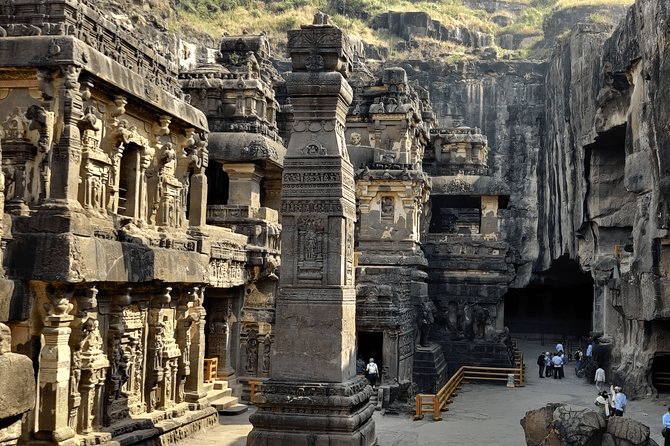
Today, Ellora Caves or एलोरा केव्स hold deep meaning. They highlight India’s artistic past. Scholars dive into their history.
In current India, they stand for religious peace. Textbooks cover them. Events at the site unite communities.
Tourism lifts the local area. It creates jobs for guides and vendors. Visitors gain insights into old ways.
Teams work on upkeep. They fix wear from weather. New methods protect the stone.
Does Ellora speak to you today? It proves diverse groups can coexist.
Practical Tips for Your Trip
Heading to Ellora Caves? Get set for adventure. The grounds cover a lot. Choose comfy shoes for trails.
Pack water and sun protection. Heat peaks in summer. Rains bring slick paths but stunning views.
On Ellora Caves tickets, check ahead. Gates sell them, or go online. Rates differ for residents and tourists. Discounts apply for students.
Consider a guide. They bring stories alive. Options include audio devices.
Follow these guidelines:
- Keep noise low inside caves.
- Skip flash when snapping photos.
- Avoid touching any artwork.
- Arrive at opening to dodge lines.
- Watch for monkeys; secure your items.
Such habits ensure a smooth experience.
Connecting Ellora to Contemporary Times
Ellora ties into India’s broad history. It mirrors shifts in power and faith. Starting in the 6th century, rulers backed the digs. Each dynasty left its mark.
As a UNESCO spot now, it draws eyes worldwide. This sparks cultural talks. Ellora Caves embody enduring spirit. They bridge ancient craft with today’s world.